

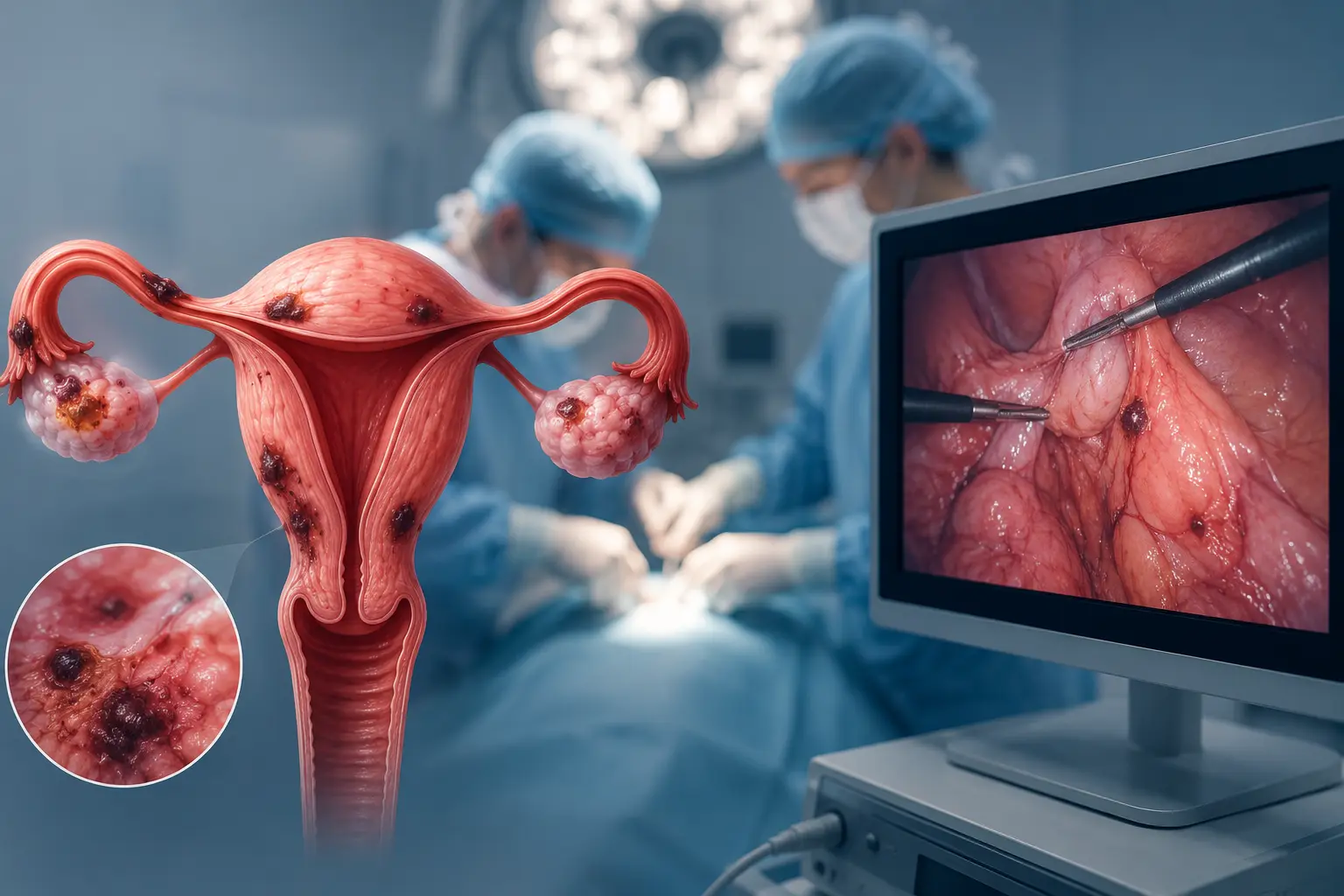
An endometriosis diagnosis does not automatically mean surgery is required. Some women manage their symptoms with pain-relieving medicines or hormonal treatment, while others may eventually need an operation because symptoms persist, an ovarian endometrioma is present, fertility needs are involved or the condition affects other pelvic organs.
The decision is individual. Age, symptoms, reproductive plans, previous treatment, imaging findings and the location of endometriosis can all influence whether surgery enters the discussion.
What Is Endometriosis?
Endometriosis occurs when tissue similar to the lining of the uterus is found outside the uterine cavity.
It can occur in areas such as the:
- Ovaries
- Fallopian tubes
- Pelvic lining
- Tissues surrounding the uterus
- Bowel
- Bladder
- Ureters
The condition may be associated with painful periods, chronic pelvic pain, pain during intercourse, bowel or urinary symptoms during menstruation and difficulty conceiving.
Some women have substantial symptoms, while others experience relatively little discomfort. The extent of disease and the amount of pain experienced do not necessarily correspond closely.
Treatment therefore needs to be considered according to the individual rather than based on the presence of endometriosis alone.
Does Endometriosis Always Require Surgery?
Non-surgical management may be considered when symptoms can be managed without an operation and there is no other clinical reason for surgery.
Depending on the woman’s circumstances, management can include:
- Pain-relieving medication
- Hormonal treatment
- Monitoring
- Management of associated symptoms
- Fertility assessment where conception is a concern
Hormonal treatments can help manage endometriosis-related pain in selected patients. They are generally used to suppress hormonal activity associated with the menstrual cycle rather than physically remove endometriotic deposits.
Medical treatment may therefore be considered before surgery in some situations.
When May Endometriosis Surgery Be Considered?
The decision to proceed with surgery should take into account the reason for treatment rather than simply whether endometriosis is present.
Patients considering endometriosis treatment in Singapore may discuss surgery when symptoms, imaging findings, fertility needs or previous treatment suggest that an operative approach should be considered.
Some common situations include the following.
Pain Persists Despite Medical Treatment
Pain management and hormonal therapy may be used before surgery for some women.
However, an operation may be considered when pelvic pain, menstrual pain or other endometriosis-related symptoms remain difficult to manage despite appropriate medical treatment.
Examples can include:
- Period pain that repeatedly disrupts work or everyday activities
- Chronic pelvic pain
- Pain during sexual intercourse
- Pain during bowel movements around menstruation
- Urinary pain linked to the menstrual cycle
Persistent symptoms do not automatically require surgery. The doctor may first reassess whether endometriosis remains the likely cause and whether additional investigations are needed.
The effect of symptoms on quality of life is also relevant when weighing treatment options.
When a Diagnosis Requires Further Clarification
Endometriosis can sometimes be suspected from symptoms, examination and imaging without immediate surgery.
Ultrasound can identify some findings associated with endometriosis, including ovarian endometriomas, while additional imaging may be considered in selected situations.
However, some forms of endometriosis may not be clearly visible on imaging.
A diagnostic laparoscopy may be discussed when symptoms continue despite treatment, the diagnosis remains uncertain or visual assessment of the pelvis is clinically relevant.
During laparoscopy, a small camera is inserted through an abdominal incision under general anaesthesia so that the pelvic organs can be examined.
If endometriosis is identified, surgical treatment may sometimes be carried out during the same procedure.
Ovarian Endometriomas May Require Surgical Assessment
Endometriosis affecting an ovary can form a cyst known as an endometrioma.
Not every endometrioma requires removal.
The decision may depend on factors such as:
- Cyst size
- Symptoms
- Changes seen during monitoring
- Imaging characteristics
- Age
- Ovarian reserve
- Previous ovarian surgery
- Fertility plans
- Whether assisted reproduction is being considered
Surgery may be considered when an endometrioma is associated with significant pain, has characteristics requiring further evaluation or creates difficulties for certain fertility procedures.
Deep Endometriosis Can Affect Other Pelvic Organs
Some cases involve endometriosis extending into tissues surrounding organs such as the bowel, bladder or ureters.
Symptoms can include:
- Pain during bowel movements
- Bowel symptoms that worsen around menstruation
- Painful urination
- Urinary symptoms linked to menstruation
- Persistent pelvic pain
Where deeper disease is suspected, imaging or other specialist investigations may be performed before surgery.
Treatment planning may also involve doctors from different specialties depending on which organs are affected.
For example, surgery involving endometriosis affecting the bowel may require input from a colorectal surgeon, while urinary tract involvement may require assessment from an appropriate urinary-system specialist.
These operations can be different from surgery for superficial pelvic endometriosis and require planning according to the structures involved.
What Is Laparoscopic Endometriosis Surgery?
Laparoscopy, sometimes referred to as keyhole surgery, is commonly used for the surgical assessment and treatment of endometriosis.
During the operation, the patient receives general anaesthesia. A laparoscope containing a camera is inserted through a small abdominal incision, with additional small incisions used for surgical instruments when required.
Depending on what is found, endometriosis surgery may involve:
- Removing visible endometriotic lesions
- Removing ovarian endometriomas
- Releasing pelvic adhesions
- Treating scar tissue
- Assessing the reproductive organs
- Restoring pelvic anatomy where possible
The particular surgical procedure depends on the location and extent of disease.
Diagnostic laparoscopy and therapeutic surgery can sometimes be carried out during the same operation if this has been discussed beforehand and the required treatment is appropriate.
Is Open Surgery Ever Required?
Some endometriosis operations are performed laparoscopically, but open abdominal surgery may be required in selected situations.
This approach is known as laparotomy.
Whether laparoscopic or open surgery is considered depends on factors such as the extent and location of disease, previous operations, associated medical conditions and the procedure required.
The surgical approach should therefore be discussed after appropriate assessment rather than assumed before the extent of the condition is understood.
When May Hysterectomy Be Discussed?
A hysterectomy involves surgical removal of the uterus.
It may be discussed in selected women with significant symptoms who have completed their family, particularly when other uterine conditions are also present or previous treatment has not provided adequate symptom control.
A separate decision may be required regarding whether the ovaries should be retained or removed.
Removing the uterus also means that carrying a future pregnancy is no longer possible. Removal of both ovaries before natural menopause has additional hormonal implications that require discussion before surgery.
For these reasons, hysterectomy is a significant treatment decision rather than a routine step in endometriosis management.
How Do Fertility Plans Affect the Decision?
Fertility is one of the main considerations when assessing whether endometriosis surgery is appropriate.
Endometriosis can affect fertility through mechanisms involving pelvic inflammation, adhesions, ovarian endometriomas and changes affecting the fallopian tubes or ovaries.
Surgery can sometimes be considered to remove endometriotic deposits, treat adhesions or restore pelvic anatomy.
However, ovarian surgery also requires caution.
Removing an ovarian endometrioma can unintentionally remove or damage some healthy ovarian tissue and may reduce ovarian reserve. This becomes particularly relevant when surgery has previously been performed on the ovaries or when cysts affect both ovaries.
A woman who wishes to conceive may therefore need to discuss several possible pathways, such as:
- Trying to conceive naturally
- Surgery followed by attempts at natural conception
- Fertility treatment without prior surgery
- Surgery before assisted reproduction
- Fertility assessment before deciding on surgery
There is no single pathway suitable for every patient.
The woman’s age, ovarian reserve, severity of pain, disease location, previous surgery and fertility history can all influence the decision.
When Surgery and Fertility Treatment Overlap
Women experiencing endometriosis-associated infertility may sometimes need to choose between surgery, assisted conception or a combination of both.
For example, surgery may warrant consideration where pain is a significant concern or where a large ovarian endometrioma affects access to the ovary during egg retrieval.
In other circumstances, proceeding to assisted fertility treatment may be discussed without prior surgery, particularly where another ovarian operation could affect ovarian reserve.
This makes fertility planning an important part of the surgical consultation rather than a separate conversation after the operation has already been decided.
What Are the Considerations Before Endometriosis Surgery?
All operations involve potential risks and trade-offs.
The specific considerations depend on what surgery is planned, where the endometriosis is located and whether other pelvic organs are involved.
Before proceeding, patients may wish to discuss:
- Why surgery is being recommended
- What the surgeon expects to treat
- Whether laparoscopy or open surgery is planned
- Whether an ovarian cyst will be removed
- Potential implications for ovarian reserve
- Whether the bowel, bladder or ureters may be involved
- Whether another surgical specialist may be needed
- What happens if the disease is different from expected
- Possible surgical complications
- Expected hospital stay
- Recovery arrangements
- Likelihood of needing medical treatment afterwards
- Implications for future fertility
Patients looking for a gynae in Singapore to discuss surgery can consider whether the doctor’s clinical practice includes the type of gynaecological surgery relevant to their condition.
How Is Endometriosis Surgery Planned?
Surgical planning generally begins before the day of the operation.
The doctor may review:
Symptoms
The location, timing and severity of symptoms can help indicate where disease may be present.
Previous Imaging
Ultrasound or MRI findings may help identify ovarian endometriomas or deeper disease and assist with planning.
Previous Operations
Earlier abdominal, pelvic or ovarian surgery can be relevant because adhesions and altered anatomy may affect the procedure.
Fertility Plans
Patients who want future pregnancies may require specific discussion about ovarian tissue, fallopian tubes and reproductive anatomy.
Possible Organ Involvement
Where imaging or symptoms suggest bowel or urinary tract involvement, other specialists may need to participate in planning.
Not every patient requires all of these assessments. The preparation depends on the proposed procedure and individual clinical circumstances.
What Happens After Surgery?
Recovery differs according to the type and extent of operation.
A limited laparoscopic procedure may involve a different recovery period from surgery for deep endometriosis involving several pelvic structures or from open abdominal surgery.
After an operation, patients may receive instructions regarding:
- Wound care
- Pain medication
- Physical activity
- Returning to work
- Sexual activity
- Follow-up appointments
- Hormonal treatment
- Fertility planning
Temporary abdominal discomfort, tiredness and discomfort around the incision sites can occur during recovery.
The healthcare team should provide individual guidance about when normal activities can resume.
When Should You Seek Medical Advice After Surgery?
Postoperative instructions should explain what symptoms require medical review.
Patients should contact their healthcare team if they develop concerning symptoms such as:
- Fever
- Increasing abdominal or pelvic pain
- Increasing redness or discharge from a wound
- Persistent vomiting
- Difficulty passing urine
- Unusual or significant bleeding
- Symptoms that are worsening rather than settling during recovery
Severe or sudden symptoms may require urgent medical assessment.
Patients should follow the discharge advice provided after their particular procedure because warning signs can differ according to the surgery performed.
Questions to Ask Before Deciding on Surgery
The decision may be easier to understand when patients know what the proposed operation is intended to address.
Questions to consider asking include:
- Why is surgery being considered in my situation?
- Are there non-surgical options I can still consider?
- What does my imaging show?
- What type of surgery is planned?
- What will be removed or treated?
- Are my ovaries involved?
- Could surgery affect my fertility?
- Should I have fertility assessment before the procedure?
- Could my bowel or urinary tract be involved?
- What are the risks of delaying surgery?
- What happens if I choose not to have surgery now?
- Can symptoms return after treatment?
- What follow-up will I need?
Surgery is one of several approaches that may be considered in the management of endometriosis, but it is not automatically required after diagnosis.
An operation may enter the discussion when symptoms remain difficult to manage, medical treatment has not provided adequate control, ovarian endometriomas are present, deeper disease affects other pelvic structures or fertility considerations make surgical assessment relevant.
The decision should take into account both the expected purpose of surgery and its potential implications, particularly for women who plan to conceive. Reviewing symptoms, imaging, previous treatment and reproductive goals with a gynaecologist can help determine whether continued medical management, surgery or another care pathway is appropriate.
Frequently Asked Questions
Does everyone with endometriosis need surgery?
No. Some women can manage symptoms with medication or hormonal treatment. Surgery may be considered according to symptoms, imaging findings, response to treatment, fertility requirements and the extent of disease.
When is surgery considered for endometriosis pain?
Surgery may be discussed when pain remains difficult to manage despite appropriate medical treatment or when the symptoms and clinical findings indicate that an operation should be considered.
What type of surgery is commonly used for endometriosis?
Laparoscopy, or keyhole surgery, is commonly used to assess and surgically treat endometriosis. Open surgery may be required in selected circumstances.
Can ovarian endometriomas be removed surgically?
Yes, ovarian endometriomas can be removed surgically. The decision should consider cyst characteristics, symptoms, previous surgery and fertility plans because surgery on the ovary can affect ovarian reserve.
Can endometriosis come back after surgery?
Yes. Endometriosis or its symptoms can recur after surgery. Follow-up management may therefore remain necessary.
Does endometriosis surgery affect fertility?
It can have different implications depending on the procedure. Surgery may restore pelvic anatomy in some situations, while operations involving ovarian endometriomas can reduce ovarian reserve. Fertility plans should therefore be discussed before surgery.
Is hysterectomy always required for severe endometriosis?
No. Hysterectomy is considered only in selected circumstances and permanently removes the ability to carry a pregnancy. The suitability of this procedure depends on the individual’s symptoms, reproductive plans and other clinical factors.
This article is for general information only and should not replace medical advice from a qualified healthcare professional.