

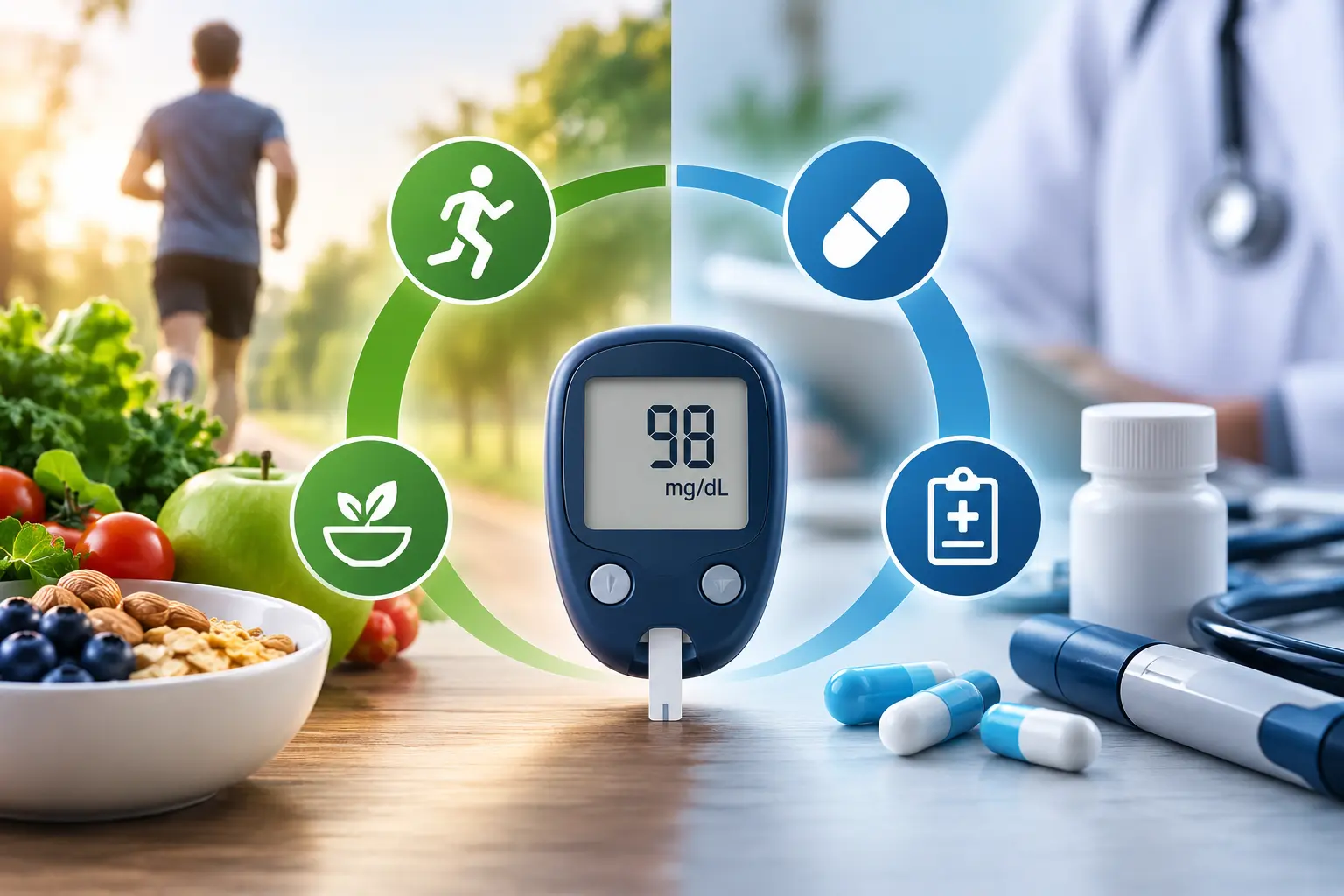
Type 2 diabetes is often described simply as a condition in which blood sugar levels become too high. While elevated blood glucose is one of its most visible features, the underlying condition is considerably more complex.
Type 2 diabetes involves changes in how the body responds to insulin, how the pancreas produces insulin, how the liver and muscles handle glucose, and how factors such as diet, physical activity, body weight, sleep and stress influence metabolic health.
For this reason, effective diabetes management should not focus only on bringing down an individual glucose reading. A more comprehensive approach looks at the factors contributing to poor glucose control and tracks whether improvements are sustained over time.
One framework that addresses two important aspects of Type 2 diabetes is a dual-target approachfocusing on insulin resistance while also supporting the remaining insulin-producing capacity of the pancreas.
Guduchi Ayurveda has built its Type 2 diabetes reversal program around a dual-target approach that focuses on two important metabolic factors: insulin resistance and beta-cell function.
Rather than following a single fixed protocol for every person, the program uses a doctor-led, stage-based approach that combines Ayurvedic treatment with personalized diet and lifestyle guidance, glucose monitoring and clinical follow-up.
What Happens in Type 2 Diabetes?
To understand why a dual-target approach may be relevant, it is useful to first understand what happens metabolically in Type 2 diabetes.
Insulin is a hormone produced by the beta cells of the pancreas. It helps glucose move from the bloodstream into cells, where it can be used for energy.
In Type 2 diabetes, the body’s tissues can become less responsive to insulin. This is known as insulin resistance.
The pancreas may initially compensate by producing more insulin. Over time, however, the beta cells may become less able to maintain the amount of insulin required to compensate for the increasing insulin resistance.
This creates two interconnected challenges:
- Insulin resistance: Cells do not respond efficiently to insulin.
- Beta-cell dysfunction: The pancreas may progressively lose its ability to produce sufficient insulin.
As these processes progress, blood glucose levels can remain elevated, eventually contributing to persistent hyperglycemia.
This is why Type 2 diabetes is more complicated than simply consuming too much sugar. Multiple metabolic processes can influence glucose regulation.
Insulin Resistance and Beta-Cell Function: The Two Reasons
A useful way of understanding Type 2 diabetes is to consider the relationship between insulin sensitivity and pancreatic insulin production.
| Metabolic factor | What happens | Why it matters |
| Insulin resistance | Cells become less responsive to insulin | More insulin may be required to regulate blood glucose |
| Beta-cell dysfunction | Insulin-producing cells may become less capable of meeting the body’s needs | Insulin availability may become inadequate as diabetes progresses |
| Persistent hyperglycemia | Blood glucose remains elevated over time | Increases the risk of diabetes-related complications |
| Metabolic factors | Weight, diet, physical activity, sleep and other factors influence glucose regulation | Lifestyle modification can be an important component of diabetes management |
A dual-target approach therefore considers both sides of the problem rather than treating blood glucose as an isolated number.
The objective is not simply to produce a short-term improvement in glucose readings. Progress needs to be evaluated using objective measures and sustained clinical follow-up.
What Does a Dual-Target Approach to Diabetes Mean?
A dual-target approach focuses on two major areas associated with Type 2 diabetes.
1. Addressing Insulin Resistance
Improving insulin sensitivity can involve several components of diabetes management, including:
- Appropriate nutrition
- Regular physical activity
- Weight management where appropriate
- Better sleep routines
- Stress management
- Consistent monitoring of glucose patterns
The exact combination depends on the individual’s health profile and existing treatment.
2. Supporting Beta-Cell Function
The second target is the body’s remaining insulin-producing capacity.
As Type 2 diabetes progresses, beta-cell function can decline. Reducing metabolic stress and improving overall glucose management are therefore important considerations in a comprehensive diabetes program.
Importantly, this does not mean that beta-cell function can simply be “restored” in every person with diabetes. The extent of pancreatic dysfunction varies between individuals.
The practical goal is to understand the individual’s metabolic condition and work towards better glucose control while preserving health and safety.
What Is Guduchi Ayurveda’s Dual-Target Approach?
Guduchi Ayurveda’s Type 2 diabetes reversal program is structured around two metabolic causes: insulin resistance and beta-cell function.
The program applies this framework through a doctor-led treatment process rooted in Ayurvedic principles. Instead of placing every patient on one identical protocol, patients move through defined stages based on their individual response and measurable signs of improvement.
The four broad stages of the program are:
- Correcting metabolism
- Reducing dependency on conventional diabetes medicines
- Shodhana, where appropriate
- Rejuvenation and long-term support
Progression through these stages is not determined by a fixed number of days or weeks. The program states that movement between stages takes place after the treating doctor assesses measurable signs and symptoms of improvement.
This stage-based structure is an important part of how Guduchi Ayurveda applies its dual-target framework.
A Stage-Based Treatment Process
Patients progress through four broad stages of care. Movement from one stage to the next is not time-bound — it takes place only after the treating doctor assesses measurable signs and symptoms of improvement.
Stage 1: Correcting Metabolism — Deepana and Ama Pachana
The first stage focuses on correcting the underlying metabolism using the Ayurvedic principles of Deepana (kindling digestive fire) and Ama Pachana (digesting accumulated metabolic toxins, or “ama”). This stage is aimed at early, tangible relief — improved symptoms, better sugar readings, and reduced inflammation or infection where present.
- Clearing ama is associated with reduced insulin resistance, since accumulated metabolic toxins are understood to interfere with how effectively cells respond to insulin
- Improved digestive metabolism lightens the load on the pancreas, supporting beta-cell function
- Reduced inflammation eases metabolic stress that can affect both targets
Stage 2: Reducing Dependency on Allopathic Medicines
As the patient’s metabolic parameters begin to respond, the focus shifts to reducing dependency on allopathic (conventional) diabetes medicines. Any tapering of medication or insulin is done gradually, based on the individual patient’s health response and status, and always under the treating doctor’s guidance and supervision.
- Medication tapering is only considered once there is measurable evidence that insulin sensitivity and beta-cell response are genuinely improving
- Gradual reduction allows the body’s own regulatory systems to take over, reflecting real (not just masked) progress on both targets
Stage 3: Ayurvedic Detoxification — Shodhana
Depending on the patient’s condition, a Shodhana (Ayurvedic detoxification) process is undertaken. This stage is not standard for every patient — it is applied as appropriate to the individual’s constitution and clinical status, with the goal of clearing deeper-rooted metabolic imbalances.
- Targets root-level metabolic imbalance rather than surface symptoms
- Supports more complete correction of insulin resistance and beta-cell strain for patients who need deeper intervention
Stage 4: Rejuvenation — Immunity-Building Treatment
The final stage involves rejuvenation treatment and medicines aimed at strengthening the patient’s overall immunity, supporting long-term resilience once glucose control has improved.
- Helps preserve beta-cell health over time rather than letting earlier gains decline
- Builds metabolic resilience that supports lasting insulin sensitivity, making the improvement more durable
Diet, Activity and Lifestyle Run Through Every Stage
Across all four stages, diet, physical activity and lifestyle changes are adjusted alongside the clinical treatment. This keeps the approach holistic — Ayurvedic medicines and the stage-based protocol work in tandem with what the patient eats, how active they are, and their daily routines, rather than any one element being treated in isolation.
- Diet and activity are two of the most direct levers on insulin resistance
- Consistent routines reduce metabolic stress that could otherwise undermine beta-cell recovery
Why Diabetes Management Needs to Be Individualised
There is no single diabetes plan that produces the same outcome for everyone.
Two people may both have Type 2 diabetes but have very different glucose patterns, medication requirements, body composition, duration of diabetes and lifestyle circumstances.
Factors that can influence an individual’s diabetes management include:
- Duration of diabetes
- HbA1c levels
- Fasting and post-meal glucose patterns
- Current medications
- Body weight and metabolic health
- Dietary habits
- Physical activity
- Sleep quality
- Stress
- Kidney health
- Cardiovascular risk
- Ability to maintain lifestyle changes
This is why an effective diabetes program should begin with understanding the person rather than simply assigning a standard diet chart or exercise routine.
Personalisation also makes lifestyle recommendations more realistic. A plan that cannot be followed consistently is unlikely to produce sustainable results, regardless of how theoretically effective it may be.
What Can a Structured Diabetes Program Include?
A comprehensive diabetes program may involve several interconnected areas of care.
| Area of care | Purpose |
| Dietary guidance | Adapt food choices, portions and meal patterns to the individual’s needs |
| Physical activity | Support glucose utilisation and overall metabolic health |
| Weight management | Address excess body weight where it is contributing to metabolic risk |
| Sleep and routines | Establish more consistent daily habits |
| Stress management | Address lifestyle factors that may affect overall metabolic health |
| Glucose monitoring | Identify fasting and post-meal glucose patterns |
| HbA1c monitoring | Assess longer-term glucose control |
| Clinical follow-up | Review progress and modify the plan when required |
| Medication review | Ensure diabetes medicines remain appropriate as glucose levels change |
This multidisciplinary structure is particularly important because diabetes management can change over time.
For example, a person whose glucose levels improve substantially may require a review of their existing medication. Any reduction or discontinuation of insulin or other glucose-lowering medicines should be undertaken only under the supervision of the treating clinician.
The Role of Diet and Physical Activity
Diet and physical activity remain important components of Type 2 diabetes management.
However, diabetes-friendly eating does not necessarily mean eliminating every carbohydrate-containing food.
The focus can instead include:
- Portion control
- Overall carbohydrate intake
- Quality of carbohydrate sources
- Adequate protein and fibre
- Meal patterns
- Reduced intake of highly processed foods
- Appropriate physical activity
Physical activity can also influence how effectively the body uses glucose. Depending on an individual’s health status, this may include walking, resistance training, aerobic exercise or other forms of movement.
The important point is that diet and activity should be considered as part of a broader metabolic strategy rather than isolated solutions.
Understanding Diabetes Reversal and Remission
The terms “diabetes reversal” and “diabetes remission” are increasingly used when discussing substantial improvements in Type 2 diabetes.
However, these terms should not be treated as interchangeable with simply having a lower blood glucose reading.
A temporary improvement in fasting or post-meal glucose does not establish that Type 2 diabetes has gone away.
Long-term outcomes should instead be assessed using objective measures such as:
- HbA1c
- Fasting glucose
- Post-meal glucose
- Medication requirements
- Body weight where relevant
- Overall metabolic health
Clinical remission also requires sustained improvement rather than a short period of better readings.
This distinction matters because Type 2 diabetes can improve significantly while still requiring ongoing monitoring. Even when glucose levels become well controlled, maintaining healthy lifestyle habits and appropriate clinical follow-up remains important.
Beyond Blood Sugar: A Different Way to Approach Type 2 Diabetes
Type 2 diabetes is not simply a problem of high blood sugar.
It involves interconnected metabolic changes, including insulin resistance and changes in beta-cell function, alongside factors such as diet, physical activity, body weight, sleep and stress.
Guduchi Ayurveda has built its Type 2 diabetes reversal program around this dual-target framework, combining Ayurvedic care with personalized nutrition, lifestyle modification, glucose monitoring and clinical follow-up.
The program follows a stage-based approach rather than applying one fixed protocol to every individual.
For people exploring Type 2 diabetes reversal, this distinction matters. The goal should not simply be to achieve a lower glucose reading as quickly as possible. Meaningful progress should involve measurable and sustainable improvements while maintaining appropriate clinical supervision and safety.
A more comprehensive approach to Type 2 diabetes begins by looking beyond the glucose number—towards insulin resistance, beta-cell function, lifestyle factors and the individual’s overall metabolic health.
That is the principle behind Guduchi Ayurveda’s dual-target approach to Type 2 diabetes reversal.
Frequently Asked Questions
What are the two main cin Type 2 diabetes?
Two important metabolic targets are insulin resistance and beta-cell function. Insulin resistance reduces the body’s response to insulin, while beta-cell dysfunction can reduce the pancreas’s ability to produce sufficient insulin.
Can Type 2 diabetes be reversed?
Some people with Type 2 diabetes can achieve substantial and sustained improvement in blood glucose and may reach clinical remission. However, outcomes vary considerably between individuals. Diabetes management should therefore be based on measurable results rather than a guaranteed timeline.
Is diabetes reversal the same as stopping medication?
No. Improved glucose levels do not automatically mean that diabetes medication can be stopped. Any medication adjustment should be based on glucose trends and clinical assessment by the treating healthcare professional.
Can Ayurveda be used for Type 2 diabetes?
Ayurvedic care may be incorporated into a structured approach to Type 2 diabetes, particularly around diet, lifestyle and individualised care. People taking diabetes medication should continue appropriate clinical monitoring and should not change prescribed medicines without medical supervision.
What is a dual-target diabetes approach?
A dual-target approach considers both insulin resistance and beta-cell function rather than focusing solely on the glucose number. The broader objective is to improve metabolic health while monitoring measurable outcomes over time. Also check :- wellorganichealth