


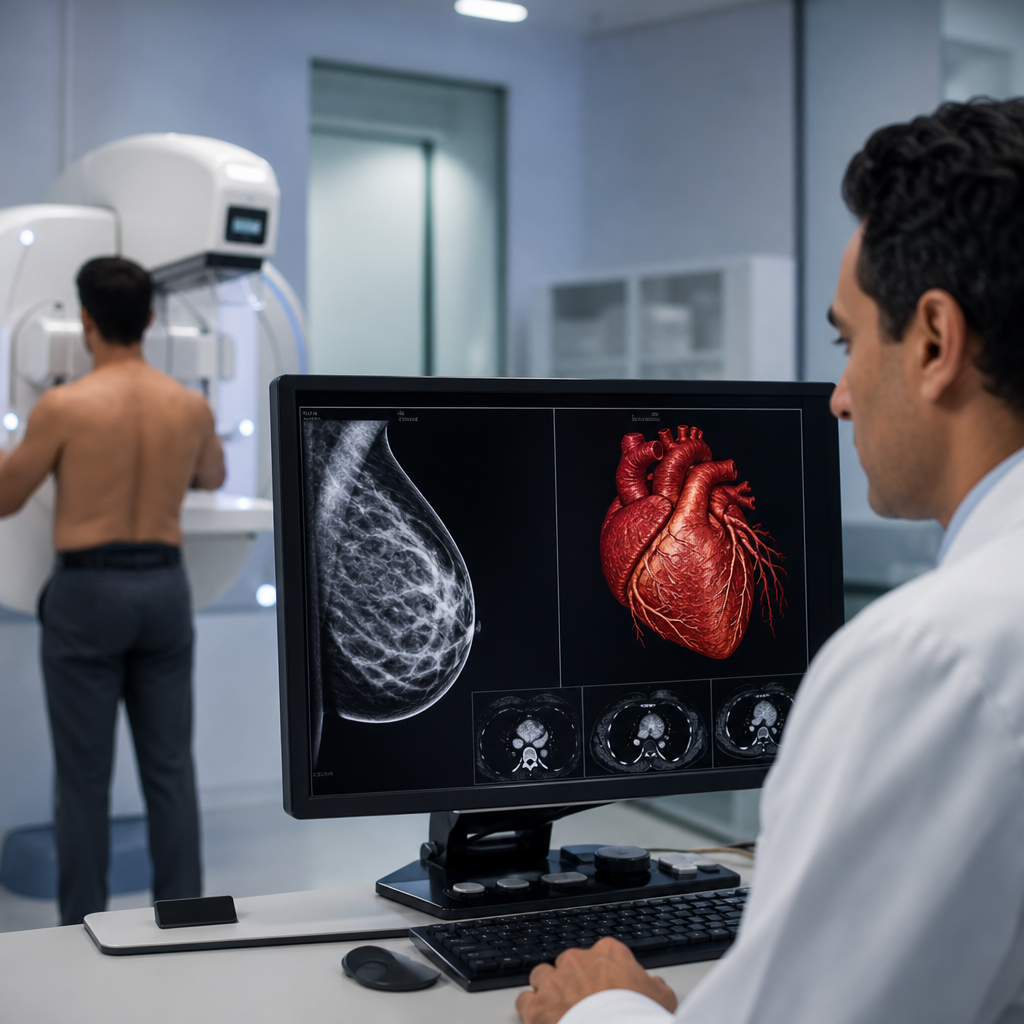
When women schedule their routine mammograms, they expect to screen for breast cancer. What many don’t realize is that the same imaging technology can offer critical insights into their cardiovascular health, potentially identifying stroke and heart disease risks years before symptoms appear. This dual benefit represents a significant shift in preventive healthcare, where a single screening appointment can address two of the leading health threats women face.
The Unexpected Connection Between Mammograms and Heart Health
Mammography equipment captures detailed images of breast tissue, but it also records something else: calcium deposits in the breast arteries, known as breast arterial calcification. These calcifications appear as bright white spots on mammogram images and indicate that calcium has accumulated in the walls of the arteries supplying blood to the breast tissue. While radiologists have long noticed these deposits, recent research has revealed their significance extends far beyond breast health.
Breast arterial calcification serves as a marker for systemic vascular disease. When calcium builds up in breast arteries, it typically reflects similar processes occurring throughout the cardiovascular system, including the coronary arteries that supply the heart and the carotid arteries that feed the brain. Studies have shown that women with breast arterial calcification face elevated risks for heart attacks, strokes, and other cardiovascular events, even when traditional risk factors like cholesterol levels and blood pressure appear normal.
What Research Tells Us About Mammography and Cardiovascular Prediction
The evidence linking breast arterial calcification to cardiovascular outcomes has grown substantially. Research demonstrates that mammograms show promise as a tool for predicting heart disease and stroke in women, with breast arterial calcification appearing in approximately 12 to 15 percent of screening mammograms. Women with these calcifications face roughly double the risk of cardiovascular disease compared to those without them, independent of other risk factors.
This relationship holds particular importance for women in midlife, when cardiovascular risk begins to accelerate but often before traditional screening protocols would flag them as high-risk candidates. The calcifications can appear in women as young as their 40s, providing an early warning system that prompts lifestyle modifications or medical interventions decades before a cardiac event might occur. The timing matters because cardiovascular disease develops gradually over years, and early identification creates opportunities for prevention that later detection cannot match.
Comprehensive Screening Approaches in Modern Healthcare
Advanced medical centers have begun integrating cardiovascular risk assessment into breast health programs, recognizing that women seeking breast cancer screening represent an ideal population for comprehensive health evaluation. Cleveland Clinic Abu Dhabi’s Breast Health & Cancer Program provides comprehensive breast cancer screening, diagnosis, treatment and reconstruction services through a multidisciplinary team of specialists. Their screening services include 3D mammography and breast MRI, which can detect both breast abnormalities and vascular calcifications, along with genetic testing and high-risk assessment for women with family histories of breast cancer or cardiovascular disease.
The Role of 3D Mammography
Three-dimensional mammography, also called digital breast tomosynthesis, creates multiple thin-slice images of breast tissue rather than the two flat images produced by conventional mammography. This technology improves cancer detection rates, particularly in women with dense breast tissue, but it also provides clearer visualization of arterial calcifications. The enhanced detail allows radiologists to assess the extent and pattern of calcification more accurately, which correlates with the degree of cardiovascular risk.
Taking Action When Calcifications Appear
When breast arterial calcification shows up on a mammogram, it doesn’t constitute a medical emergency, but it does warrant follow-up. Women should discuss the findings with their primary care physician or a cardiologist who can conduct a comprehensive cardiovascular assessment. This evaluation typically includes blood pressure measurement, lipid panel testing, blood glucose assessment, and potentially additional imaging such as coronary calcium scoring or carotid ultrasound.
The assessment informs a prevention strategy tailored to individual risk. For some women, lifestyle modifications prove sufficient: adopting a Mediterranean-style diet rich in vegetables, fruits, whole grains, and healthy fats; engaging in regular aerobic exercise for at least 150 minutes weekly; maintaining healthy body weight; managing stress through proven techniques; and ensuring adequate sleep. For others, particularly those with multiple risk factors or a family history of early cardiovascular disease, medication may be appropriate. Statins, blood pressure medications, and antiplatelet agents can significantly reduce cardiovascular event rates when used appropriately.
Understanding the Broader Context of Women’s Health Risks
Cardiovascular disease remains the leading cause of death among women globally, yet it receives less attention than breast cancer in public health messaging aimed at women. This discrepancy has real consequences: women are more likely to delay seeking care for heart attack symptoms, less likely to receive aggressive treatment for cardiovascular disease, and more likely to die within a year of their first heart attack compared to men. The ability to identify cardiovascular risk during routine breast cancer screening addresses this gap by reaching women through a preventive service they already access regularly.
Stroke risk deserves particular attention in this context. When a stroke occurs, immediate medical intervention becomes critical, but the aftermath requires sustained support. Recovery depends not only on acute medical care but also on comprehensive rehabilitation that addresses physical, cognitive, and emotional effects. Programs that offer stroke rehabilitation combine physical therapy, occupational therapy, and speech therapy to help survivors regain function and independence.
The environmental and psychological dimensions of recovery matter significantly in long-term health challenges where sustained support and appropriate surroundings influence outcomes.
Practical Steps for Women
Women should ensure that breast arterial calcification is routinely reported when present on mammograms. Not all radiology centers currently include this information in standard reports, though practice is shifting as evidence accumulates. When scheduling a mammogram, ask whether the facility evaluates and reports breast arterial calcification. If calcifications appear on your report, request a copy and schedule an appointment with your primary care provider to discuss implications and next steps.
Maintaining regular screening schedules remains essential. Guidelines generally recommend annual or biennial mammography starting at age 40 or 50, depending on individual risk factors and current guidelines in your region. Women with family histories of breast cancer, known genetic mutations, or other risk factors may need earlier or more frequent screening. These appointments serve dual purposes when cardiovascular assessment is integrated into the interpretation process.
The Future of Integrated Screening
The integration of cardiovascular risk assessment into breast cancer screening represents a broader trend toward opportunistic screening, where routine medical encounters serve multiple preventive purposes. Artificial intelligence tools are being developed to automatically detect and quantify breast arterial calcification on mammograms, reducing the interpretation burden on radiologists and ensuring consistent reporting. As these technologies mature and evidence continues to accumulate, cardiovascular risk stratification may become a standard component of every mammogram report.
This evolution requires coordination across medical specialties. Radiologists, primary care physicians, cardiologists, and breast health specialists must communicate effectively to ensure that incidental findings lead to appropriate follow-up rather than confusion or unnecessary anxiety. Developing standardized protocols for when and how to evaluate women with breast arterial calcification will help translate research findings into consistent clinical practice that improves outcomes without overwhelming healthcare systems or patients.
For women, the message is straightforward: breast cancer screening serves purposes beyond detecting malignancy. The same appointment that checks for breast cancer can reveal cardiovascular risks that remain hidden by conventional screening approaches. Understanding this dual benefit empowers women to advocate for comprehensive reporting, engage in informed discussions with healthcare providers, and take proactive steps to protect both breast health and cardiovascular wellbeing throughout their lives.