

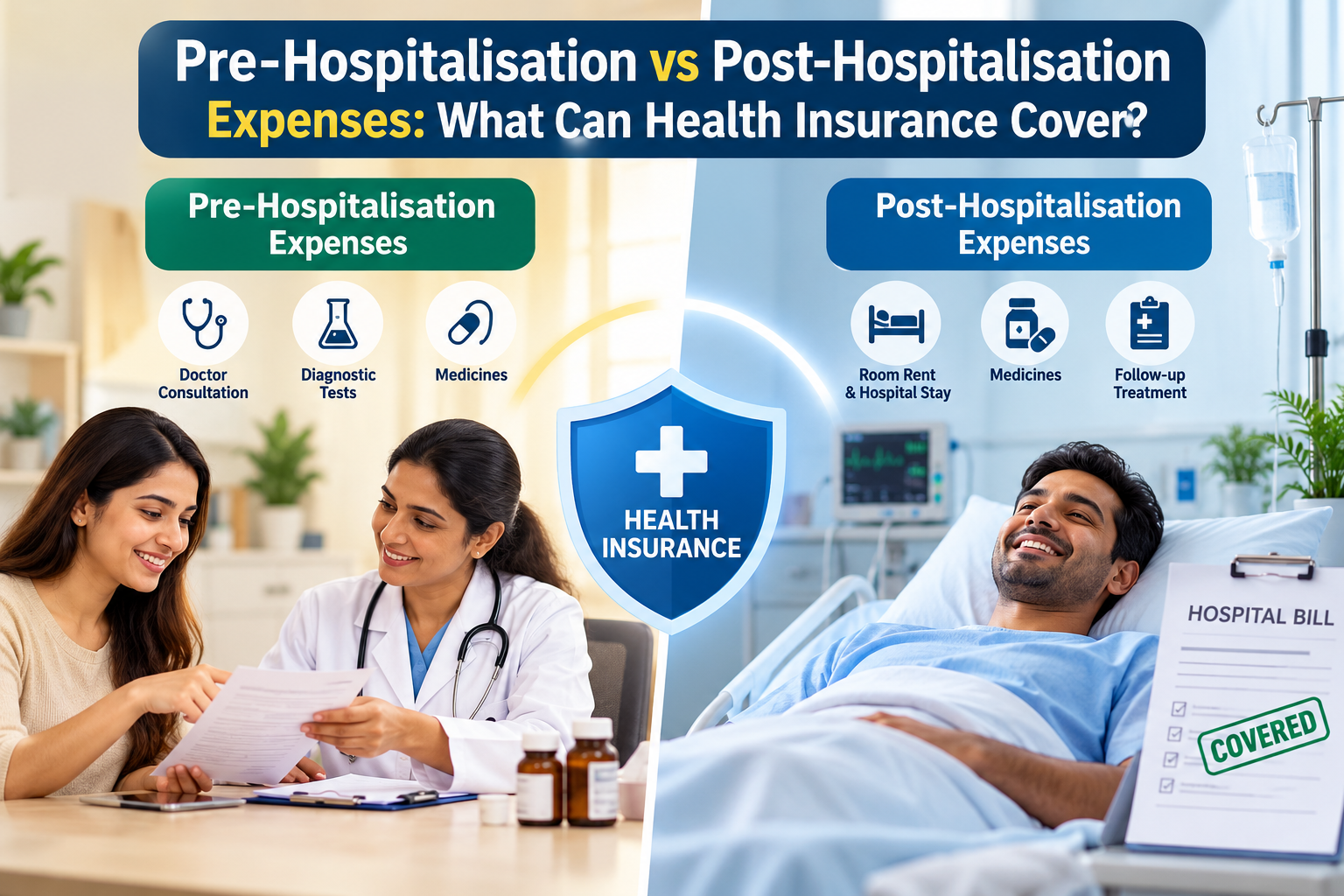
Hospital treatment often involves costs before admission and after discharge. You may need doctor consultations, tests, medicines, or follow-up visits even when you are not staying in the hospital. Depending on the policy terms, health insurance may cover some of these related medical expenses.
Understanding the difference between pre-hospitalisation and post-hospitalisation expenses can help you know what may be included in a claim and what documents you may need to keep.
WellHealthOrganic shares practical health and insurance information to help readers make more informed decisions.
What Are Pre-Hospitalisation Expenses?
Pre-hospitalisation expenses are medical costs you incur before being admitted to a hospital for treatment. These costs are usually linked to the same illness, injury, or condition that later requires hospitalisation. For example, a doctor may advise blood tests, scans, specialist consultations, or medicines before admission.
Some health insurance plans may cover such expenses when they are directly related to the hospitalisation and meet the policy conditions. The important point is the connection between the expense and the final hospital treatment. Routine consultations or unrelated tests may not be covered simply because they happened before hospital admission.
What Are Post-Hospitalisation Expenses?
Post-hospitalisation expenses are medical costs that arise after you leave the hospital. Recovery often continues at home, so you may still need medicines, follow-up consultations, diagnostic tests, or other treatment related to the same condition. These expenses may be covered if the policy includes post-hospitalisation benefits and the costs are connected to the hospitalisation claim.
For older family members, it can also be useful to compare senior citizen health insurance carefully, because follow-up care needs may differ from one person to another. Policy wording should always be checked before assuming that every expense after discharge will be reimbursed.
What Is the Difference Between Pre and Post-Hospitalisation Coverage?
The timing is different, but both types of cover recognise that necessary medical spending can happen outside the hospital stay. Whether a particular bill qualifies still depends on the policy wording and its conditions.
| Point | Pre-Hospitalisation Coverage | Post-Hospitalisation Coverage |
| When it applies | Before hospital admission | After hospital discharge |
| Main purpose | Covers medical expenses linked to diagnosis and preparation for treatment | Covers medical expenses linked to recovery and follow-up care |
| Common expenses | Consultations, tests, scans, prescribed medicines | Follow-up visits, tests, medicines, related treatment |
| Key condition | Expense should usually relate to the condition that led to hospitalisation | Expense should usually relate to the same hospitalisation |
| Claim review | Bills and medical records may be checked for relevance | Bills and discharge documents may be checked for relevance |
Which Pre-Hospitalisation Expenses Are Covered?
Coverage depends on the policy, but common pre-hospitalisation expenses may include costs that help diagnose or prepare for the treatment that follows.
These may include:
- Doctor consultations related to the condition for which you are later admitted.
- Diagnostic tests advised before hospitalisation.
- Scans or imaging required for diagnosis or treatment planning.
- Prescribed medicines taken before admission.
- Specialist consultations connected to the same medical condition.
The expense must generally have a clear medical link with the hospitalisation. Preventive check-ups, routine tests, or unrelated treatment may fall outside the scope of the claim.
A medically useful test is not automatically payable. The policy may require the test or consultation to be prescribed and directly connected with relevant hospital treatment.
Which Post-Hospitalisation Expenses Are Covered?
After discharge, treatment does not always end immediately. A doctor may ask you to continue medicines, return for review, or undergo further tests to track recovery.
Post-hospitalisation cover may include:
- Follow-up doctor consultations.
- Prescribed medicines used during recovery.
- Diagnostic tests related to the treated condition.
- Medical reviews advised after discharge.
- Other treatment expenses specifically linked to the same hospitalisation.
Keep prescriptions, bills, reports, discharge papers, and payment receipts safely. These documents may be needed when you submit the claim.
How Many Days of Expenses Are Covered Before and After Hospitalisation?
There is no single period that applies to every policy. The allowed period for pre-hospitalisation and post-hospitalisation expenses depends on the terms of the health insurance policy you hold.
Before making a claim, check:
- How far back the policy accepts pre-hospitalisation expenses.
- How long post-hospitalisation expenses remain eligible after discharge.
- Whether the expense must be directly related to the hospital treatment.
- Whether any specific documents are required.
- Whether certain treatments, tests, or medicines are excluded.
It is better to read the policy wording instead of assuming that all expenses before admission or after discharge will be covered.
Conclusion
Pre-hospitalisation and post-hospitalisation cover can help with medical costs that arise around a hospital stay, but the expense must usually be connected to the same treatment. Coverage can differ across policies, including the type of expense accepted and the claim conditions. Keep all medical records and bills organised, read the policy wording carefully, and check the applicable terms before submitting your claim. This can also reduce avoidable claim-related confusion later.