

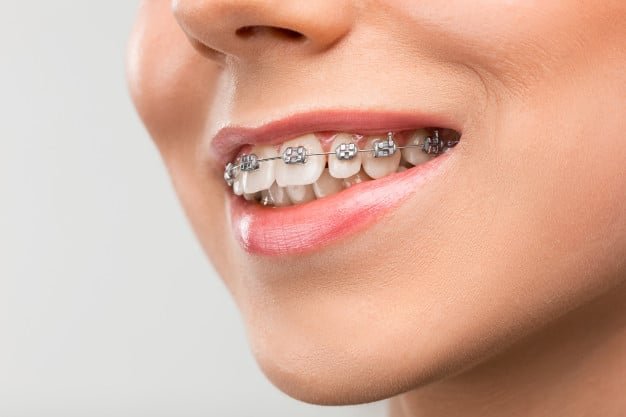
Dental braces are used to move teeth and correct problems with tooth alignment and bite. Although traditional metal braces remain widely used, patients in Singapore can choose from several orthodontic appliances depending on their dental needs, age, lifestyle and treatment preferences.
Common options include:
- Traditional metal braces
- Ceramic braces
- Self-ligating braces
- Lingual braces
- Clear aligners such as Invisalign
- Removable orthodontic appliances
- Functional appliances for selected growing patients
- Expansion appliances for certain jaw and bite problems
These options do not all work in exactly the same way or treat the same types of problems.
For example, fixed braces remain attached to the teeth throughout treatment, while clear aligners can be removed. Some appliances are designed primarily to move teeth, while others may be used during growth to influence the relationship between the jaws.
The most suitable option depends on the type and severity of the orthodontic problem rather than appearance alone.
What Are Fixed Braces?
Fixed braces consist of brackets attached to the teeth and wires that connect the brackets.
The orthodontic wire applies controlled forces to gradually move the teeth into planned positions.
Fixed braces can be used to address a wide range of orthodontic problems, including:
- Crowding
- Spacing
- Overbite
- Increased overjet
- Underbite
- Crossbite
- Open bite
- Certain impacted teeth
Brackets can be made from different materials, which gives patients several fixed-brace options.
1. Traditional Metal Braces
Traditional metal braces use metal brackets bonded to the front surfaces of the teeth.
The brackets are connected with an archwire, which is adjusted throughout treatment to guide tooth movement.
How Do Metal Braces Work?
The orthodontist places brackets on selected teeth and connects them using archwires.
Controlled forces are applied through the wire and other components to gradually change tooth position.
During follow-up appointments, the orthodontist may:
- Change the archwire
- Adjust the existing wire
- Add elastics
- Add springs
- Use other orthodontic components
The exact treatment depends on the patient’s bite and the movements required.
Who May Be Suitable for Metal Braces?
Metal braces can be used for children, teenagers and adults, depending on their dental development and treatment needs.
They may be particularly useful when:
- Significant tooth movement is required
- The bite is complex
- Precise control of individual teeth is needed
- The patient may have difficulty complying with a removable appliance
Because they are fixed, patients do not need to remember to put the braces back in after meals.
What Are the Advantages of Metal Braces?
Potential advantages include:
- Suitable for a broad range of orthodontic problems
- Fixed to the teeth throughout treatment
- Can provide controlled tooth movement
- Generally durable
- Suitable for many complex cases
What Are the Limitations?
Metal braces are more noticeable than some other orthodontic options.
They also require additional attention to oral hygiene because food and plaque can collect around the brackets and wires.
Patients may need to avoid certain hard or sticky foods to reduce the risk of damaging the appliance.
2. Ceramic Braces
Ceramic braces are fixed braces that use tooth-coloured or relatively less noticeable brackets.
They work using the same basic principle as conventional fixed braces, with brackets and wires applying controlled forces to move the teeth.
Who May Consider Ceramic Braces?
Ceramic braces may be suitable for teenagers and adults who need fixed orthodontic treatment but prefer an appliance that is less noticeable.
They can be used for many of the same alignment problems treated with metal braces.
What Are the Advantages of Ceramic Braces?
Potential advantages include:
- Less noticeable brackets
- Fixed throughout treatment
- Can treat many types of orthodontic problems
- Suitable for patients who prefer an aesthetic alternative to metal braces
What Are the Limitations?
Ceramic brackets can be more brittle than metal brackets.
Patients may therefore need to take additional care with foods or activities that could damage the brackets.
The appearance of ceramic braces can also change during treatment depending on the type of elastic components used and the patient’s eating and oral hygiene habits.
3. Self-Ligating Braces
Self-ligating braces are fixed braces that use brackets with a built-in mechanism to hold the archwire in place. An example of this would be the Damon braces.
Traditional braces often use elastic ligatures around the brackets, while self-ligating brackets use a clip or sliding mechanism.
Self-ligating brackets can be made from metal or ceramic materials.
How Are Self-Ligating Braces Different?
The main difference is how the archwire is secured.
With conventional brackets:
- Elastic or wire ligatures may hold the archwire in place.
With self-ligating brackets:
- A built-in clip or door holds the wire.
The basic objective remains the same: controlled movement of the teeth.
Are Self-Ligating Braces Faster?
Self-ligating braces are sometimes marketed as requiring less treatment time or producing faster tooth movement.
However, patients should not assume that self-ligating brackets automatically make orthodontic treatment faster.
Treatment duration depends on factors such as:
- Complexity of the bite
- Amount of tooth movement required
- Patient response
- Compliance
- Missed appointments
- Treatment objectives
The type of bracket is only one part of the overall treatment plan.
4. Lingual Braces
Lingual braces are fixed braces attached to the back surfaces of the teeth rather than the front.
This makes them much less visible during normal conversation and smiling.
Who May Consider Lingual Braces?
Lingual braces may appeal to:
- Adults
- Older teenagers
- People who prefer fixed treatment
- Patients who are concerned about the appearance of front-mounted braces
However, lingual braces are not necessarily suitable for every patient.
The available space behind the teeth, bite relationship and complexity of the required movements can affect whether this approach is appropriate.
What Are the Advantages of Lingual Braces?
The main advantage is their visibility.
Because the brackets are positioned on the inner surfaces of the teeth, they are difficult to see from the front.
They also remain fixed to the teeth, so patients do not need to remember to wear them.
What Are the Limitations?
Because the brackets sit close to the tongue, patients may initially experience:
- Tongue irritation
- Changes in speech
- Difficulty cleaning certain areas
Some patients adapt quickly, while others may need more time to become comfortable with the appliance.
What Are Clear Aligners?
Clear aligners are removable orthodontic appliances made from transparent plastic.
Instead of brackets and wires, patients wear a series of customised aligners that progressively move the teeth.
Invisalign is one clear aligner system. Other clear aligner systems are also available.
Clear aligners are different from conventional braces because they can be removed for:
- Eating
- Drinking
- Brushing
- Flossing
How Do Clear Aligners Work?
A digital scan or dental impression is used to create a model of the patient’s teeth.
The treatment is then planned as a series of gradual tooth movements.
Each aligner is worn for a prescribed period before moving to the next stage.
The aligners need to be worn consistently for treatment to progress according to plan.
Who May Be Suitable for Clear Aligners?
Clear aligners may be suitable for selected patients with:
- Mild to moderate crowding
- Spacing
- Crooked teeth
- Selected overbites
- Certain crossbites
- Some open bites
More complex cases may also be treated with clear aligners in some circumstances, sometimes with attachments or elastics.
However, clear aligners are not appropriate for every orthodontic problem.
What Are the Advantages of Clear Aligners?
Potential advantages include:
- Less noticeable than conventional braces
- Removable
- Easier access for brushing and flossing
- Fewer dietary restrictions compared with fixed braces
- No conventional brackets and wires
What Are the Limitations?
Clear aligners depend heavily on patient compliance.
They generally need to be worn for most of the day.
Potential challenges include:
- Forgetting to wear them
- Losing an aligner
- Removing them too frequently
- Difficulty achieving certain complex movements
- Needing additional aligners if teeth do not track as planned
Patients who are unlikely to wear their aligners consistently may be better suited to a fixed appliance.
Are Clear Aligners Considered Dental Braces?
Clear aligners are generally considered an orthodontic treatment, but they are structurally different from traditional braces.
Traditional braces use:
- Brackets
- Wires
- Other fixed components
Clear aligners use:
- Removable transparent trays
For patients researching “braces”, clear aligners are often considered alongside fixed braces because both are used to correct tooth alignment and bite problems.
However, the treatment experience and suitability can differ significantly.
What Are Removable Orthodontic Appliances?
Removable orthodontic appliances are appliances that patients can take in and out of their mouths.
They may be used for:
- Simple tooth movements
- Certain children’s orthodontic problems
- Jaw growth-related treatment
- Space management
- Retention after active treatment
They are different from clear aligners because removable appliances can include various designs and may perform different functions.
Who May Use Removable Appliances?
They may be used particularly in younger patients whose teeth and jaws are still developing.
The appliance selected depends on the specific problem.
Patients need to follow the recommended wearing schedule for the appliance to work effectively.
What Are Functional Appliances?
Functional appliances are used in selected growing patients to address certain relationships between the upper and lower jaws.
They may be considered when there is a developing discrepancy between the jaws.
These appliances can be:
- Fixed
- Removable
- Used alongside other orthodontic appliances
Why Is Growth Important?
Some functional appliances are intended to work while the jaws are still developing.
Their usefulness can therefore depend on the patient’s age and stage of growth.
They are not suitable for every bite problem, and they are generally not a substitute for jaw surgery in adults with significant skeletal discrepancies.
What Are Expansion Appliances?
Expansion appliances are used to widen the upper dental arch or address certain discrepancies in the width of the upper and lower jaws.
They may be considered for selected patients with:
- Posterior crossbite
- Narrow upper dental arch
- Certain developing jaw-width problems
Are Expanders Only Used in Children?
Expansion can be performed in both younger and older patients, but the type of expansion possible depends partly on skeletal maturity.
Growing patients may respond differently from adults.
An orthodontist will assess the patient’s dental and skeletal development before recommending an expansion appliance.
How Do the Different Types of Braces Compare?
| Type | Fixed or removable? | Appearance | Typical use |
| Metal braces | Fixed | Highly visible | Broad range of orthodontic problems |
| Ceramic braces | Fixed | Less noticeable | Many alignment and bite problems |
| Self-ligating braces | Fixed | Metal or ceramic | Similar range to other fixed braces |
| Lingual braces | Fixed | Hidden behind teeth | Selected patients seeking less visible fixed treatment |
| Clear aligners | Removable | Relatively discreet | Selected mild to complex alignment problems |
| Removable appliances | Removable | Varies | Selected developing or simpler orthodontic problems |
| Functional appliances | Fixed or removable | Varies | Selected jaw-related problems during growth |
| Expansion appliances | Usually fixed | Visible depending on design | Selected crossbite and jaw-width problems |
This table provides a general comparison. The suitability of each appliance depends on the individual orthodontic diagnosis.
Which Type of Braces Is Suitable for Crowded Teeth?
Several types of orthodontic treatment can address crowding.
The appropriate choice depends on the severity of the crowding and the amount of space required.
Mild to Moderate Crowding
Depending on the case, treatment may involve:
- Clear aligners
- Ceramic braces
- Metal braces
Severe Crowding
More significant crowding may require:
- Fixed braces
- Space creation
- Expansion
- Interproximal reduction in selected cases
- Tooth extraction in some cases
- A combination of appliances
Clear aligners may be suitable for some complex crowding cases, but the treatment plan should be based on whether the required tooth movements can be achieved predictably.
Which Type of Braces Is Suitable for an Overbite?
An overbite can have different causes.
A mild overbite may be primarily related to tooth position, while a more significant bite problem may involve the relationship between the upper and lower jaws.
Treatment options can include:
- Metal braces
- Ceramic braces
- Clear aligners
- Functional appliances in selected growing patients
- Orthodontic treatment combined with jaw surgery in certain adults
The appropriate appliance depends on the underlying cause rather than the appearance of the overbite alone.
Which Type of Braces Is Suitable for an Underbite?
Underbites can be caused by:
- Tooth position
- Upper jaw development
- Lower jaw position
- A combination of dental and skeletal factors
Mild dental underbites may sometimes be corrected using orthodontic tooth movement.
More significant skeletal underbites may require treatment during growth or, in adults, a combination of orthodontics and orthognathic surgery.
An orthodontic assessment is needed to determine which approach is appropriate.
Which Type of Braces Is Suitable for a Crossbite?
The treatment depends on whether the crossbite is caused by tooth position or a difference in jaw width.
Possible treatments include:
- Fixed braces
- Clear aligners for selected cases
- Expansion appliances
- Other appliances during growth
Children with developing crossbites may benefit from earlier assessment because treatment options can differ depending on the stage of growth.
Which Type of Braces Is Suitable for Adults?
Adults can undergo orthodontic treatment using several types of appliances.
Options may include:
- Metal braces
- Ceramic braces
- Lingual braces
- Clear aligners
The choice depends on:
- Type of orthodontic problem
- Complexity
- Oral health
- Lifestyle
- Appearance preferences
- Ability to comply with treatment instructions
Adults may also require additional dental treatment before orthodontic treatment begins.
Which Type of Braces Is Suitable for Teenagers?
Teenagers may be suitable for:
- Metal braces
- Ceramic braces
- Clear aligners
- Functional appliances
- Other orthodontic appliances
The decision depends on the stage of dental development and the type of bite problem.
For example, a teenager with a developing jaw discrepancy may require an appliance that addresses growth rather than simply moving the teeth.
Which Type of Braces Is Suitable for Children?
Children may not need traditional braces immediately.
An early orthodontic assessment can determine whether the child needs:
- Monitoring
- An expansion appliance
- A functional appliance
- A removable appliance
- Limited early orthodontic treatment
- Comprehensive treatment at a later stage
The timing of treatment is particularly important when jaw growth or abnormal tooth eruption is involved.
Are There Braces That Are Less Noticeable?
Yes.
Patients who are concerned about appearance can consider several less noticeable options.
Ceramic Braces
Ceramic brackets are closer in colour to natural teeth than conventional metal brackets.
Lingual Braces
Lingual braces are positioned behind the teeth.
Clear Aligners
Clear aligners are transparent and removable.
Each option has different limitations.
For example, lingual braces are fixed but may take time to adapt to, while clear aligners are removable but require consistent wear.
Are Clear Braces the Same as Ceramic Braces?
No.
The terms can sometimes be confusing.
Ceramic braces use brackets attached to the teeth and connected with orthodontic wires.
Clear aligners use a series of removable transparent trays.
Both can be less noticeable than conventional metal braces, but they are different types of orthodontic appliances.
Are Self-Ligating Braces Better Than Traditional Braces?
Not necessarily.
Self-ligating braces use a different mechanism to secure the archwire, but the overall treatment objective remains the same: to move the teeth in a controlled manner.
There is no single bracket system that is automatically the right choice for every patient.
The orthodontist may recommend one type based on:
- Treatment requirements
- Tooth movement
- Bite problem
- Patient preferences
- Clinical considerations
How Long Does Treatment With Braces Take?
Treatment duration varies depending on the type and complexity of the orthodontic problem.
Factors include:
- Degree of crowding
- Bite severity
- Number of teeth involved
- Type of tooth movement required
- Patient age
- Type of appliance
- Compliance
- Missed appointments
- Broken appliances
As a general guide, fixed orthodontic treatment often takes around 15 to 24 months, although some straightforward cases may take less time and complex cases may take longer.
Treatment involving jaw discrepancies can require a longer and more involved process.
An individual treatment estimate can be provided after an orthodontic assessment.
What Happens Before You Get Braces?
An orthodontic assessment should take place before treatment begins.
Dental Examination
The orthodontist may examine:
- Tooth alignment
- Bite
- Tooth eruption
- Crowding
- Spacing
- Jaw relationship
Oral Health Check
The teeth and gums should be assessed for:
- Tooth decay
- Gum disease
- Dental infections
- Other conditions requiring treatment
Active dental disease may need to be managed before orthodontic treatment starts.
Diagnostic Records
Depending on the case, records may include:
- Dental photographs
- Digital scans
- Dental impressions
- Panoramic X-rays
- Cephalometric X-rays
- Other imaging where required
These records help determine the treatment approach.
Does the Type of Braces Affect Oral Hygiene?
Yes.
Fixed braces can make brushing and flossing more challenging because brackets and wires create additional areas where plaque and food can collect.
Patients wearing fixed braces should take extra care to clean:
- Around each bracket
- Under the archwire
- Between the teeth
- Along the gumline
Clear aligners can be removed for brushing and flossing, which can make routine oral hygiene easier.
However, clear aligners still require good oral hygiene because wearing them over teeth with food debris or plaque can create problems.
What Foods Can You Eat With Braces?
Dietary considerations depend on the appliance.
Fixed Braces
Patients may be advised to avoid or limit:
- Hard sweets
- Sticky sweets
- Ice
- Very hard foods
- Chewy foods
These can damage brackets or wires.
Clear Aligners
Because clear aligners are removed before meals, patients generally have fewer food restrictions.
However, aligners should not normally be worn while eating.
Patients should also maintain good oral hygiene before replacing them.
Do You Need Retainers After Braces?
Usually, yes.
Teeth can move after active orthodontic treatment.
Retainers are used to help maintain the positions achieved during treatment.
They may be:
- Fixed
- Removable
- A combination of both
How Long Do You Need Retainers?
The wearing schedule depends on the individual treatment.
Some patients may initially wear removable retainers more frequently before transitioning to nighttime use.
Long-term retention is generally important because teeth can continue to shift over time.
How Should You Choose Between Different Types of Braces?
The first consideration should be the orthodontic problem.
Ask:
What Needs to Be Corrected?
Is the concern:
- Crowding?
- Spacing?
- Overbite?
- Underbite?
- Crossbite?
- Open bite?
- Jaw alignment?
How Complex Is the Treatment?
More complex tooth movements may require a fixed appliance or additional orthodontic techniques.
How Important Is Appearance?
If appearance is a major concern, you may wish to compare:
- Ceramic braces
- Lingual braces
- Clear aligners
Can You Follow the Treatment Requirements?
Clear aligners require consistent wear.
Fixed braces require careful oral hygiene and dietary precautions.
What Is Your Budget?
Different appliances have different costs.
A treatment quotation should clarify what is included and whether additional procedures or retainers are charged separately.
There are several types of dental braces and orthodontic appliances available in Singapore, including traditional metal braces, ceramic braces, self-ligating braces, lingual braces and clear aligners such as Invisalign. Removable, functional and expansion appliances may also be used for selected patients, particularly when treatment involves developing teeth or jaw relationships.
Each option has different characteristics.
Metal and ceramic braces are fixed appliances that can address a broad range of tooth alignment and bite problems. Self-ligating braces use a different bracket mechanism, while lingual braces are attached to the back of the teeth. Clear aligners are removable and less noticeable but require consistent wear and may not be suitable for every complex orthodontic movement.
The right choice should therefore not be based solely on appearance, cost or popularity. An orthodontic assessment can determine the nature of the bite problem, the movements required and which appliances can provide an appropriate treatment approach.
Patients considering braces in Singapore can then compare suitable options based on effectiveness, appearance, comfort, maintenance, treatment duration, compliance requirements and cost.
This article is for general information only and should not replace professional dental advice.