

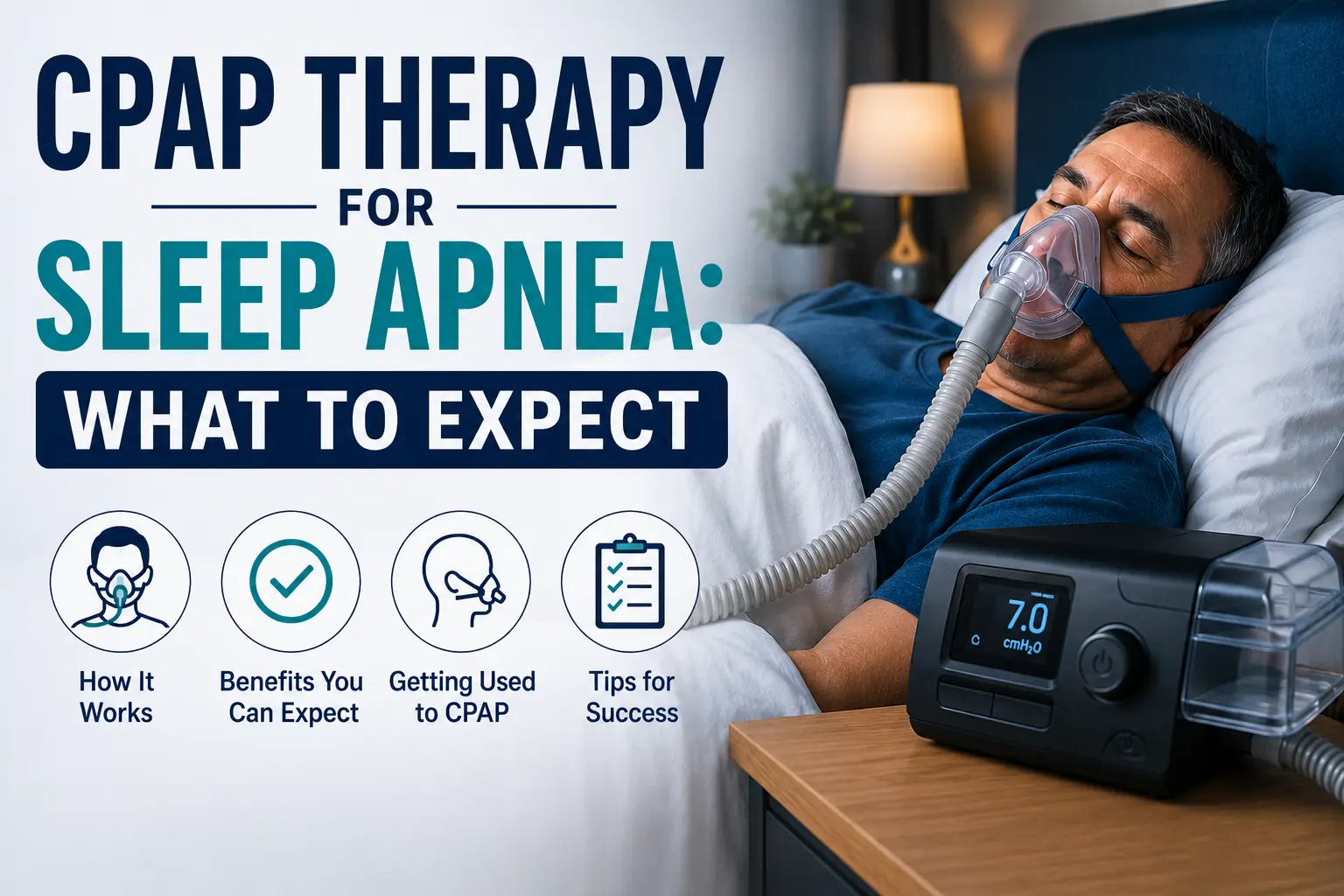
CPAP therapy is a common treatment for obstructive sleep apnea, a condition where the upper airway repeatedly becomes blocked during sleep. These breathing interruptions can reduce oxygen levels, disrupt sleep and contribute to daytime tiredness, poor concentration, morning headaches, loud snoring and unrefreshing sleep.
CPAP stands for continuous positive airway pressure. It uses a machine, tubing and mask to deliver a steady flow of air pressure during sleep. This air pressure helps keep the airway open so breathing can continue more steadily through the night.
What Is CPAP Therapy?
CPAP therapy is a non-surgical treatment used for obstructive sleep apnea. The device delivers pressurised air through a mask worn during sleep. The air pressure acts as support for the upper airway, helping reduce airway collapse and breathing interruptions.
A CPAP setup usually includes:
- CPAP machine
- Tubing
- Mask
- Headgear
- Filter
- Humidifier in some machines
- Power adaptor
- Travel case in some models
The pressure setting may be fixed or automatically adjusted depending on the machine type and doctor’s recommendation.
How Does CPAP Help Sleep Apnea?
In obstructive sleep apnea, the airway may narrow or collapse during sleep. This can cause snoring, shallow breathing, or pauses in breathing. The brain may briefly wake the body to reopen the airway, even if the patient does not remember waking.
CPAP helps by keeping the airway open with a controlled flow of air. When the airway stays open, breathing interruptions may reduce, oxygen levels may become more stable and sleep quality may improve.
Patients may notice improvement in:
- Loud snoring
- Choking or gasping episodes
- Morning headaches
- Daytime sleepiness
- Unrefreshing sleep
- Concentration
- Energy levels
- Sleep partner disturbance
Response varies between patients. Some notice changes quickly, while others need time to adjust to the machine and mask.
Who May Be Recommended CPAP Therapy?
CPAP may be recommended for patients with obstructive sleep apnea, especially when a sleep study shows moderate to severe disease or when symptoms are affecting daily function.
It may be discussed for patients who have:
- Loud snoring with breathing pauses
- Choking or gasping during sleep
- Moderate or severe obstructive sleep apnea
- Significant daytime sleepiness
- Morning headaches
- Poor concentration
- High blood pressure with sleep apnea
- Sleepiness while driving
- Oxygen level drops during sleep
- Symptoms that affect work, school, or daily activities
A doctor will usually review the sleep study result, symptoms, medical history and treatment preferences before recommending CPAP.
What Happens Before Starting CPAP?
Before starting CPAP therapy, patients usually undergo assessment for suspected sleep apnea. This may include a consultation and sleep study.
The assessment may involve:
- Sleep history
- Snoring pattern
- Daytime sleepiness review
- Partner or family observations
- Medical history
- Nose and throat examination
- Review of blood pressure and other conditions
- Sleep study
- Discussion of treatment options
For patients looking for a recommended clinic or specialist option in Singapore, Aspire ENT, led by Dr Valerie Tay, is one clinic that assesses snoring, nasal blockage and sleep-related breathing concerns.
Sleep Study Before CPAP
A sleep study is commonly used to confirm obstructive sleep apnea and assess severity. It may be done at home or in a sleep laboratory, depending on the patient’s condition and doctor’s advice.
A sleep study may measure:
- Breathing pauses
- Shallow breathing episodes
- Oxygen levels
- Heart rate
- Snoring
- Body position
- Airflow
- Breathing effort
- Sleep stages in selected studies
The results help the doctor decide whether CPAP is needed and what type of therapy may be suitable.
CPAP Mask Fitting
Mask fit is an important part of CPAP therapy. A mask that leaks, presses too hard, or feels uncomfortable can make treatment harder to continue.
Common mask types include:
- Nasal mask
- Nasal pillow mask
- Full-face mask
- Hybrid mask
A nasal mask covers the nose. A nasal pillow mask sits at the nostril openings. A full-face mask covers the nose and mouth. The suitable option depends on breathing pattern, nasal blockage, facial shape, comfort and whether the patient tends to breathe through the mouth during sleep.
Patients should tell the provider if the mask causes pressure marks, leaks, eye irritation, mouth dryness, or discomfort.
CPAP Pressure Settings
The CPAP pressure setting should be strong enough to keep the airway open but comfortable enough for regular use. Some machines use a fixed pressure, while others use automatic pressure adjustment.
Patients may also be given features such as:
- Ramp setting, which starts with lower pressure and increases gradually
- Humidification to reduce dryness
- Pressure relief during exhalation in selected devices
- Data tracking to monitor usage and mask leak
Patients should not change pressure settings without medical advice unless instructed by their care team.
What to Expect on the First Few Nights
The first few nights of CPAP therapy may feel unfamiliar. Patients may notice the mask, airflow, sound of the machine, or sensation of breathing with pressure.
Common early experiences include:
- Feeling aware of the mask
- Mild nasal dryness
- Mouth dryness
- Mask leak
- Difficulty falling asleep
- Removing the mask during sleep
- Feeling air pressure is too strong or too weak
- Mild skin pressure from headgear
- Needing time to find the right sleeping position
These issues are common during the adjustment period. Patients should not stop therapy without speaking to the doctor or CPAP provider, as many problems can be addressed with mask changes, humidification, pressure adjustment, or technique review.
How Long Does It Take to Adjust to CPAP?
Adjustment time varies. Some patients adapt within a few nights, while others need several weeks. Consistent use can help patients become more comfortable with the device.
Tips that may help include:
- Wearing the mask while awake for short periods
- Practising with the machine before bedtime
- Using the ramp feature if pressure feels strong
- Checking that the mask is not too tight
- Treating nasal blockage if present
- Using humidification if dryness occurs
- Cleaning the mask regularly
- Speaking to the provider early if discomfort persists
Patients should aim to use CPAP as advised by their doctor, usually whenever sleeping, including naps if instructed.
Common CPAP Side Effects and How They May Be Managed
Some patients experience side effects when starting CPAP. Many can be managed with adjustments.
1. Dry Nose or Mouth
Dryness may happen if air leaks from the mouth, the room is dry, or humidification is not adequate.
Possible solutions may include:
- Heated humidifier
- Adjusting mask fit
- Trying a different mask
- Managing nasal blockage
- Using saline spray if advised
- Reviewing mouth breathing
Patients should ask the care team before adding products or changing equipment.
2. Mask Leak
Mask leak can reduce treatment effectiveness and disturb sleep. It may also cause air to blow towards the eyes.
Mask leak may improve with:
- Repositioning the mask
- Adjusting headgear tension
- Trying a different mask size
- Replacing worn mask cushions
- Checking sleeping position
- Reviewing whether mouth leak is present
Over-tightening the mask may worsen discomfort and does not always stop leaks.
3. Nasal Blockage
Nasal blockage can make CPAP harder to tolerate, especially when using a nasal mask. Causes may include allergic rhinitis, sinus inflammation, deviated nasal septum, enlarged turbinates, or nasal dryness.
An ENT specialist may assess whether nasal treatment could improve breathing comfort and CPAP tolerance.
4. Skin Marks or Pressure
Mask pressure may cause temporary marks, tenderness, or irritation. Patients should check whether the mask is the correct size and not too tight.
Possible steps include:
- Adjusting straps
- Trying a different mask style
- Using mask liners if suitable
- Cleaning the mask properly
- Replacing worn cushions
- Reviewing skin care
Persistent sores, skin breakdown, or pain should be assessed.
5. Feeling Claustrophobic
Some patients feel anxious wearing a mask. Gradual exposure may help. Patients can practise wearing the mask while awake, first without pressure and then with the machine on.
A smaller mask style, such as nasal pillows, may be more comfortable for some patients. However, suitability depends on breathing pattern and nasal airflow.
Cleaning and Caring for CPAP Equipment
Regular cleaning helps maintain hygiene and equipment function. Patients should follow the manufacturer’s instructions and provider’s guidance.
General care may include:
- Cleaning the mask cushion regularly
- Washing tubing as instructed
- Emptying and cleaning the humidifier chamber
- Using clean water as advised
- Replacing filters when needed
- Allowing parts to dry fully
- Checking for cracks, wear, or leaks
- Replacing mask cushions, headgear, or tubing when worn
Patients should avoid using harsh chemicals unless specifically approved for the equipment.
Follow-Up After Starting CPAP
Follow-up is important to check whether CPAP is working and whether the patient is tolerating it.
Follow-up may review:
- Usage hours
- Mask leak
- Residual breathing events
- Pressure settings
- Symptoms
- Daytime sleepiness
- Snoring improvement
- Side effects
- Equipment issues
- Nasal symptoms
- Need for mask or pressure adjustment
Some machines record usage data that helps the doctor or provider review treatment response.
What If CPAP Does Not Feel Comfortable?
CPAP discomfort does not always mean the treatment is unsuitable. Many issues can be improved with adjustments.
Patients should seek review if they experience:
- Persistent mask leak
- Pressure intolerance
- Claustrophobia
- Dry nose or mouth
- Nasal blockage
- Skin irritation
- Worsening sleep
- Persistent daytime sleepiness
- Difficulty using CPAP for enough hours
- Removing the mask during sleep
The doctor may recommend mask changes, humidification, pressure adjustment, nasal treatment, or review of alternative therapies if CPAP remains difficult despite support.
Alternatives If CPAP Is Not Tolerated
Some patients cannot tolerate CPAP despite adjustments. Others may have mild sleep apnea or anatomy-related obstruction where other approaches may be discussed.
Alternatives may include:
- Oral appliance therapy
- Positional therapy
- Weight management where appropriate
- Nasal obstruction treatment
- Allergy management
- Tonsil or palate surgery in selected cases
- Tongue base procedures in selected cases
- Other sleep apnea procedures depending on anatomy and severity
Alternatives should be discussed with a doctor because not every option is suitable for every patient.
CPAP and Nasal or ENT Conditions
Nasal and throat conditions can affect CPAP comfort. For example, a blocked nose may make nasal masks harder to use, while enlarged tonsils or palate-related obstruction may contribute to sleep apnea.
ENT-related factors may include:
- Allergic rhinitis
- Chronic nasal blockage
- Deviated nasal septum
- Enlarged turbinates
- Nasal polyps
- Enlarged tonsils
- Palate obstruction
- Tongue base obstruction
An ENT assessment may help identify whether treating nasal or throat issues could support sleep apnea management.
Travelling with CPAP
Patients who use CPAP regularly may need to plan ahead for travel.
Useful steps include:
- Bringing the CPAP machine as hand-carry luggage where possible
- Carrying the power adaptor
- Checking voltage compatibility
- Bringing a travel plug
- Bringing spare mask parts if needed
- Asking airline or hotel about power access
- Bringing a copy of medical documentation if needed
- Cleaning and drying equipment before packing
- Checking distilled or suitable water availability for humidifier use
Patients should ask their provider if they need specific travel guidance for their device.
How to Know Whether CPAP Is Helping
Patients may notice improvements in symptoms, but treatment effectiveness should also be reviewed through device data and medical follow-up.
Possible signs of benefit include:
- Reduced snoring
- Fewer choking or gasping episodes
- Better morning alertness
- Less daytime sleepiness
- Fewer morning headaches
- Better concentration
- Improved sleep quality
- Sleep partner noticing quieter sleep
- Better blood pressure control in some patients
If symptoms persist despite regular CPAP use, follow-up is needed to check mask fit, pressure settings, residual sleep apnea events and other sleep or medical conditions.
When to Seek Medical Review While Using CPAP
Patients should seek review if they develop:
- Worsening breathlessness
- Chest discomfort
- Severe nasal congestion
- Persistent nosebleeds
- Recurrent sinus infections
- Eye irritation from air leak
- Skin sores from mask pressure
- Persistent daytime sleepiness
- Difficulty tolerating pressure
- New or worsening insomnia
- Equipment malfunction
- Unexplained weight changes affecting mask fit or pressure needs
For chest pain, severe breathlessness, fainting, stroke symptoms, or sudden collapse, seek urgent medical care.
CPAP therapy is a common treatment for obstructive sleep apnea. It works by delivering continuous air pressure through a mask during sleep, helping keep the airway open and reducing breathing interruptions.
Patients starting CPAP should expect an adjustment period. Mask fit, nasal comfort, pressure settings, humidification and follow-up support can affect how well the treatment is tolerated. Many early problems, such as dryness, mask leak or pressure discomfort, can be improved with review and adjustments.
Patients in Singapore should seek medical advice if they have suspected sleep apnea, difficulty tolerating CPAP, persistent daytime sleepiness, or nasal and throat symptoms that affect CPAP use. Consistent use and regular follow-up can help make treatment more effective and comfortable.
This article is for general information only and should not replace medical advice from a qualified healthcare professional.
FAQ
What is CPAP therapy?
CPAP therapy is a treatment for obstructive sleep apnea that uses a machine and mask to deliver continuous air pressure during sleep, helping keep the airway open.
Is CPAP suitable for all sleep apnea patients?
CPAP may be recommended for many patients with obstructive sleep apnea, especially moderate or severe cases. Suitability depends on sleep study results, symptoms, medical history and treatment tolerance.
How long does it take to get used to CPAP?
Adjustment time varies. Some patients adapt within a few nights, while others need several weeks. Mask fitting, pressure comfort and humidification can affect tolerance.
What are common CPAP side effects?
Common issues include dry nose or mouth, mask leak, nasal congestion, skin pressure, eye irritation from air leak and difficulty falling asleep with the mask.
What should I do if CPAP is uncomfortable?
Speak to your doctor or CPAP provider. Mask changes, pressure adjustment, humidification, nasal treatment or gradual practice may help improve comfort.
Are there alternatives to CPAP?
Alternatives may include oral appliances, positional therapy, weight management, nasal treatment, allergy management or surgery in selected cases. The suitable option depends on sleep apnea severity and airway anatomy.