

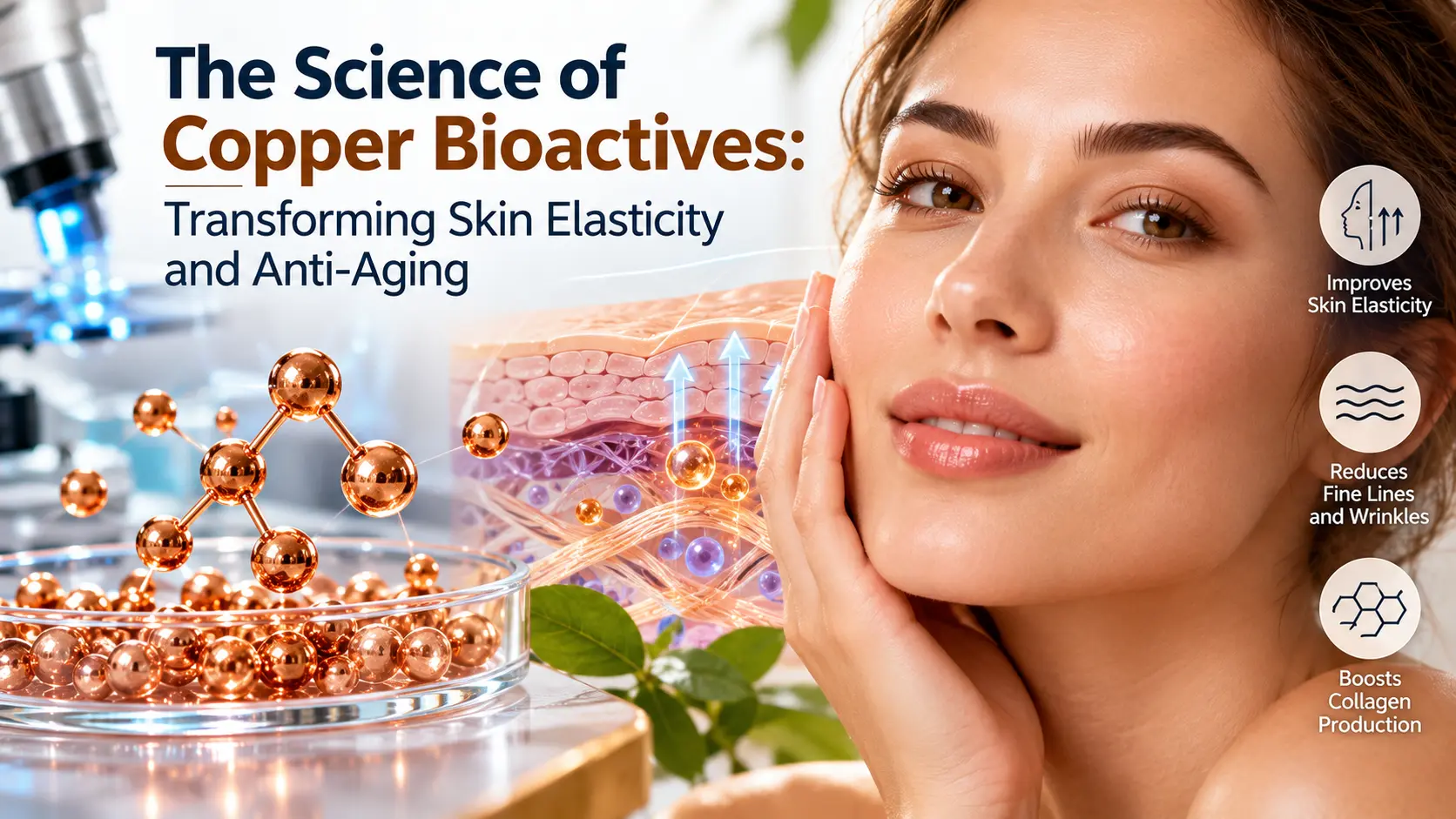
Copper peptides are biological messengers that reverse the process of death in skin cells and increase the production of collagen and elastin in order to restore elasticity and resilience. Copper complexes are not only responsible for the formation of lines on the surface but also help to remodel the extracellular matrix deep inside, thus healing tissue damage and protecting against oxidative breakdown.
The understanding of why topical copper is the key to aging skin can be explained by a degradation in cell signaling over the years. The amount of the tripeptide Glycyl-L-Histidyl-L-Lysine falls by about 60% in the human plasma from ages 20 to 60. This pronounced decrease is directly linked to the decrease in fibroblast activity, loss of skin density, and impaired tissue recovery.
Conventional retinoids are very effective at inducing cell turnover and can be very irritating to the skin, as well as disrupting the barrier. Bioactive copper works via a gene-modulating approach. The study published in the International Journal of Molecular Sciences reveals that ghk cu regulates more than 4,000 genes in human cells, including the activation of tissue repair processes and the inhibition of pro-inflammatory factors. Bioactive copper, instead of insisting on peeling out quickly, is an architect; it’s a way of delivering a micro-dose of ionic copper right into the dermis to cross-link the collagen and elastin fibers, while at the same time instructing cells to build from within.
How Copper Peptides Rebuild Dermal Structure
Bioactive copper complexes act as carrier peptides that transport copper ions into cells where they act as important cofactors for enzymatic reactions. In particular, copper is involved in the cross-linking of collagen and elastin filaments into a strong, stable network, which is essential for maintaining the elasticity of the collagen network.
| Mechanism | Biological Function | Direct Skin Impact |
| Fibroblast Activation | Signals dermal fibroblasts to stimulate synthesis | Thickens and densifies the dermis (skin) |
| Lysyl Oxidase Cofactor | Cross-links new collagen and elastin fibers. | Improves the spring-back elasticity and firmness of the product. |
| MMP Balance | Regulates MMPs and TIMPs | Removes damaged collagen but does not break down healthy collagen. |
| GAG Synthesis | Increases glycosaminoglycans and hyaluronic acid | Highly plump, hydrating skin |
Copper peptides do not simply plump up the outer layers of the skin; they restore the structural framework that lies under the outer skin. In these areas of the face, including the eye area, jawline, and neck, this structural reinforcement has a direct effect on tensile strength, eliminating skin laxity.
What to Expect: A Clinical Timeline
Dermis’ structural proteins can take time to rebuild. The typical biological progression that occurs during human clinical studies with topical application of bioactive copper is:
Hydration & Barrier Stabilization
Weeks 1–2: Proper synthesis of glycosaminoglycan (GAG) occurs, which means deeper moisture. The surface of the skin becomes smoother, and any irritated or red areas on the skin gradually settle.
Tone & Clarity Improvements
Weeks 4–8: Natural cell turnover and the antioxidants signal less blotchiness or hyperpigmentation. Fine line depth and micro-texture are first noticed.
Structural Firmness & Elasticity
Weeks 8–12: The density of the dermis is enhanced by a newly cross-linked collagen and elastin network. In clinical trials, the volume of wrinkles was measurably reduced by up to 35-55%, and the elasticity of the wrinkles improved.
Maximizing Results in Your Routine
The integration of bioactive copper in the daily routine requires proper integration of various measures in order to protect the peptide from degradation and increase active copper bioavailability.
- Gentle Cleanser: Clean the skin barrier using a pH-balanced cleanser that will not disrupt the barrier layer and its balance.
- Apply Copper Peptides first: Copper peptides can be applied on a clean skin surface; lipid interference does not penetrate the skin surface.
- Avoid Acid Conflicts: Copper peptides cannot be used together with (Hydroxy) acidic substances such as L-ascorbic acid (vitamin C) or any other AHAs or BHAs, since they will complex the copper ion and destroy the peptide structure.
- Finish with hydration: Apply the barrier cream, which contains ceramides or fatty acids, in order to maintain hydration and stimulate the matrix formation.
- Protection daily: Apply a broad-spectrum SPF30+. The new collagen produced is decomposed faster than it is formed under the effect of UV rays.
Some of the ways that you could go about deciding on a suitable preparation include the following:
- Topical serums (1-2% concentration): Suitable for anti-aging treatment, reducing wrinkles, and making the skin elastic in the face and neck areas.
- Post-treatment recovery preparations: Specialized preparations that are utilized after microneedling or light chemical peelings for the healing process and reduce the recovery time by half.
- Peptide complex: The combination of copper complex and neurotransmitter peptides (Argireline), which is utilized to specifically smooth dynamic lines and at the same time, rebuild them.
In designing a specific treatment program, ghk cu is one of the most extensively researched bioactive copper complexes.
Frequently Asked Questions
Is it safe to use copper peptides in combination with retinoids?
Yes, but it’s best to switch them up. Bioactive copper is to be applied in the morning to help your skin with antioxidant protection and structural maintenance, and retinoids are to be applied in the evening to stimulate the cell renewal process.
How does the bioactive copper differ from Vitamin C?
Vitamin C is a potent antioxidant that could be helpful for your baseline collagen, and bioactive copper is a gene-regulating factor that helps control the matrix breakdown and support the tissue repair process.
Are there any side effects?
Most skin types are able to accept topical copper peptides, but high concentrations can cause temporary redness and irritation in some cases; therefore, you should start with 1% copper.
When can I expect the appearance of young skin as a result of my treatment?
Improvement in the skin texture and hydration can be seen in 1-2 weeks, while improvement in skin structure, elasticity, and wrinkle reduction will be optimal after 8-12 weeks.
Natural Rejuvenation of Youthful Rebound
Bioactive copper peptides are a new generation of skin care health products, now in a new direction, from harsh resurfacing to restorative tissue engineering. You are giving your skin the boost that it needs for the signal which it loses over time, allowing it to naturally replenish its structure. The end result is not only a shine but also elasticity, density, and bounciness.