
Ptosis surgery is a procedure that aims to correct drooping of the upper eyelid by improving the position or function of the eyelid-lifting mechanism. While the procedure may help improve eyelid appearance and, in some cases, visual function, recovery is an important part of the overall treatment process.
Many patients are eager to know how long it takes for swelling to settle, when they can return to work and when they will see the final results.
Recovery after ptosis surgery varies depending on factors such as the surgical technique used, the extent of correction required, individual healing response and whether other eyelid procedures are performed at the same time.
What Is Ptosis Surgery?
Ptosis surgery is performed to correct ptosis, a condition where the upper eyelid droops lower than normal.
Ptosis may occur due to:
- Age-related weakening of the eyelid muscle
- Changes in eyelid-supporting tissues
- Congenital factors
- Previous injury or surgery
- Nerve-related causes
During ptosis surgery, the surgeon may adjust or repair the structures responsible for lifting the eyelid.
The specific technique depends on factors such as:
- Severity of drooping
- Eyelid muscle strength
- Cause of ptosis
- Patient goals
What Are the Goals of Ptosis Surgery?
Ptosis surgery may be performed to:
- Improve eyelid position
- Create better eyelid symmetry
- Improve visual field when drooping affects vision
- Reduce the need to compensate by raising the eyebrows
- Improve overall eyelid appearance
It is important to understand that the goal is improvement rather than achieving completely identical eyelids, as natural facial asymmetry is common.
Before Surgery: Preparing for Recovery
Recovery planning begins before the procedure.
Patients may prepare by:
Arranging Time Away From Work
Depending on the nature of the job, patients may need time away from work while swelling and bruising improve.
Those with work involving:
- Heavy physical activity
- Outdoor exposure
- Extensive screen use
may require additional planning.
Preparing Post-Surgery Supplies
Patients may prepare:
- Prescribed medication
- Clean towels
- Cold compresses if recommended
- Sunglasses for outdoor protection
- Comfortable pillows
Following Pre-Surgery Instructions
Patients should follow instructions provided by their surgeon, including guidance regarding:
- Medication use
- Supplements
- Smoking
- Eating and drinking before surgery
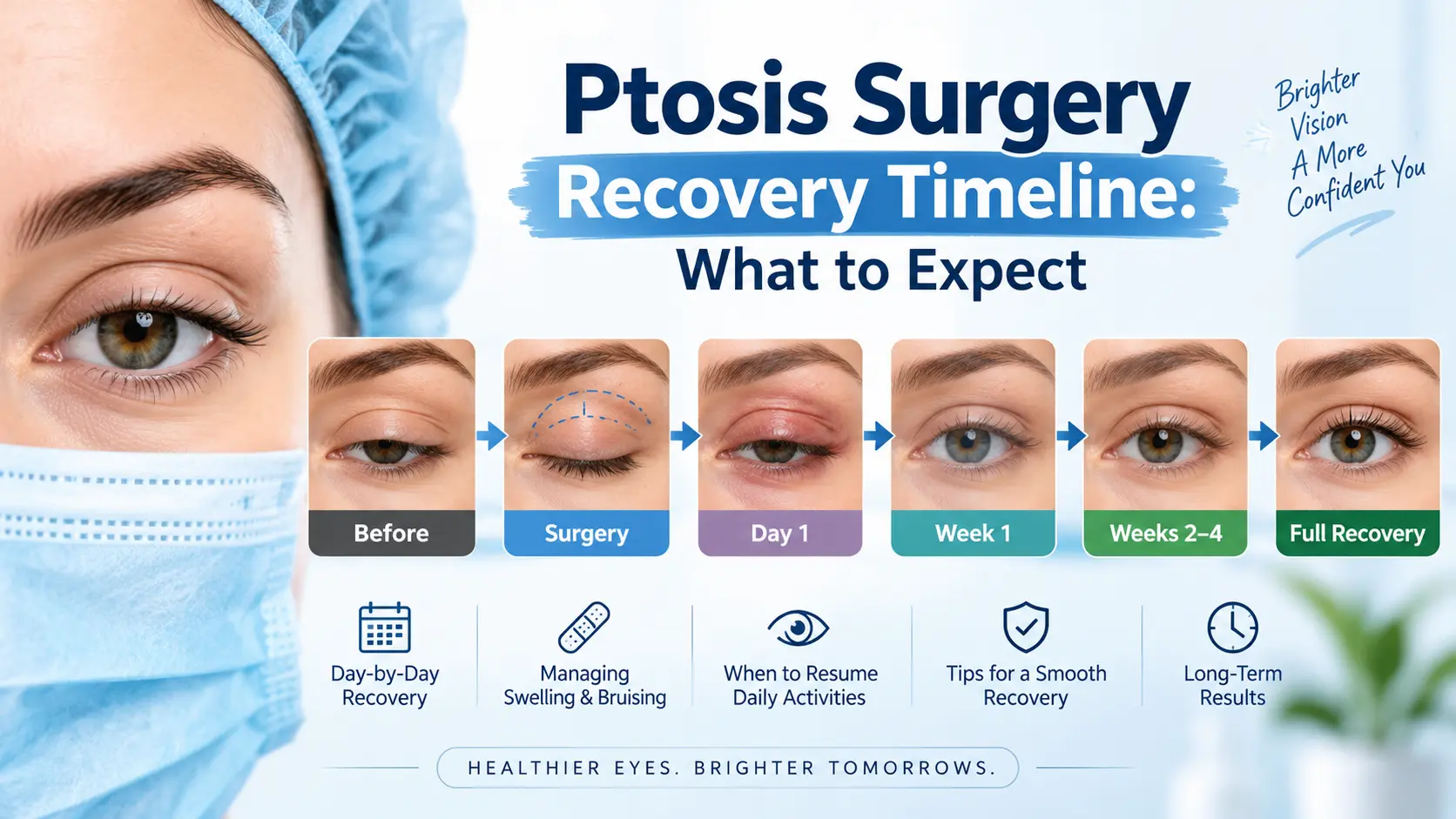
Ptosis Surgery Recovery Timeline
Recovery varies between individuals, but the following provides a general guide of what patients may experience.
First Few Days After Ptosis Surgery
The first few days are usually focused on managing swelling, protecting the eyes and allowing the tissues to begin healing.
Patients may experience:
- Swelling around the eyelids
- Bruising
- Tightness
- Mild discomfort
- Temporary difficulty closing the eyes fully
- Sensitivity around the eye area
These effects are common during early healing.
What Patients Can Do During This Stage
Patients may be advised to:
- Rest adequately
- Keep the head elevated while sleeping
- Follow medication instructions
- Avoid rubbing the eyes
- Apply cold compresses if recommended
It is normal for the eyelids to appear uneven during the early recovery period because swelling may affect each side differently.
Week 1 After Ptosis Surgery
During the first week, swelling and bruising are usually still noticeable.
Patients may experience:
- Tight eyelid sensation
- Mild irritation
- Changes in eyelid position
- Difficulty achieving a natural eyelid movement
Follow-up appointments are often scheduled during this period to allow the surgeon to:
- Check healing
- Monitor eyelid position
- Assess early results
- Provide further care instructions
Patients should avoid activities that may increase pressure around the eyes.
These may include:
- Strenuous exercise
- Heavy lifting
- Activities that cause excessive sweating
Weeks 2 to 4 After Ptosis Surgery
During this stage, many patients begin noticing gradual improvement.
Common changes include:
- Reduced bruising
- Less swelling
- Improved comfort
- More natural eyelid appearance
Patients may gradually return to more normal activities depending on their recovery progress and surgeon’s advice.
However, minor swelling may still remain, especially around the eyelid area.
One to Three Months After Ptosis Surgery
Between one and three months after surgery, the eyelids usually continue settling.
Patients may notice:
- More stable eyelid position
- Improved symmetry
- Reduced tightness
- More natural appearance
Some minor differences between both eyes may still occur as healing continues.
During this period, follow-up appointments allow the surgeon to monitor progress.
Three to Six Months After Ptosis Surgery
By this stage, many patients experience more noticeable improvements.
Healing continues as:
- Remaining swelling decreases
- Tissues soften
- Eyelid movement becomes more natural
The final appearance may continue improving gradually.
When Are the Final Results Visible?
The final results of ptosis surgery may take several months to fully appreciate.
This is because:
- Eyelid tissues need time to heal
- Swelling gradually resolves
- The eyelid position stabilises over time
Patients should avoid judging final results too early during recovery.
Common Recovery Concerns After Ptosis Surgery
1. Uneven Eyelids During Recovery
It is common for eyelids to appear uneven shortly after surgery.
This may happen because:
- Swelling differs between sides
- Healing occurs at different rates
- Eyelid tissues are still adjusting
Temporary asymmetry does not necessarily indicate an unsuccessful outcome.
2. Difficulty Closing the Eyes Fully
Some patients may experience temporary difficulty closing the eyes completely after surgery.
This may occur due to:
- Swelling
- Tightness
- Adjustment of eyelid position
Patients should discuss any persistent discomfort or dryness with their surgeon.
3. Dry or Irritated Eyes
Some patients may experience:
- Dryness
- Eye irritation
- Increased sensitivity
Following aftercare instructions and using recommended eye care products may help improve comfort.
When Can You Return to Work After Ptosis Surgery?
The timing depends on:
- Type of work
- Amount of swelling
- Individual healing
Patients with office-based work may return once they feel comfortable and their symptoms allow.
Those with jobs involving:
- Physical activity
- Outdoor environments
- Heavy lifting
may need more recovery time.
Your surgeon can provide guidance based on your specific situation.
When Can You Exercise After Ptosis Surgery?
Patients are usually advised to avoid strenuous exercise during the early recovery period.
Activities that may need to be avoided temporarily include:
- Running
- Weight training
- High-intensity workouts
- Sports activities
Gradual return to exercise should be based on healing progress and medical advice.
How to Support Recovery After Ptosis Surgery
Following aftercare instructions can help support healing.
1. Protect the Eye Area
Patients should:
- Avoid rubbing the eyes
- Be gentle when cleaning the face
- Protect the eyes from excessive sun exposure
2. Attend Follow-Up Appointments
Follow-up visits allow the surgeon to:
- Monitor healing
- Assess eyelid position
- Address concerns
3. Maintain Healthy Habits
Supporting overall healing may include:
- Getting enough rest
- Eating a balanced diet
- Staying hydrated
- Avoiding smoking
4. Follow Activity Restrictions
Patients should avoid returning to demanding activities too quickly.
Allowing sufficient healing time can help reduce unnecessary strain on the surgical area.
Factors That Affect Ptosis Surgery Recovery
Recovery may vary depending on:
Surgical Technique
Different ptosis correction methods may involve different healing timelines.
Severity of Ptosis
Patients requiring greater correction may experience different recovery patterns.
Individual Healing Response
Each person heals differently depending on factors such as:
- Age
- General health
- Skin quality
- Lifestyle factors
Additional Procedures
Recovery may differ if ptosis surgery is combined with other procedures, such as blepharoplasty.
Signs You Should Contact Your Surgeon After Ptosis Surgery
Patients should seek medical advice if they experience:
- Increasing pain
- Sudden vision changes
- Severe swelling
- Signs of infection
- Excessive bleeding
- Persistent inability to close the eyes
- Worsening symptoms
While some discomfort and swelling are expected, unusual or worsening symptoms should be assessed.
Recovery after ptosis surgery is a gradual process that involves allowing the eyelid tissues to heal and adjust after correction. While swelling, bruising and temporary changes in eyelid appearance are common during the early stages, most patients notice gradual improvement over the following weeks and months.
Understanding the recovery timeline, following aftercare instructions and attending follow-up appointments are important parts of achieving a smooth recovery.
Patients considering ptosis surgery should consult a qualified plastic surgeon to discuss their condition, expected outcomes and the most suitable treatment approach for their individual needs.
This article is for general information only and should not replace medical advice from a qualified healthcare professional.