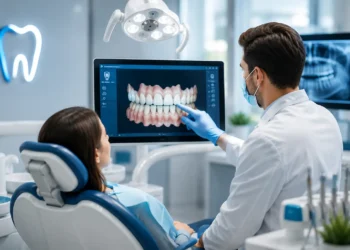


If you’ve ever winced biting into ice cream, taken a sharp breath with a sip of cold water, or flinched when a toothbrush bristle touched a certain spot — you’re not alone. Tooth sensitivity is one of the most common dental complaints there is, affecting people of all ages.
Here’s the part most people don’t know: in many cases, your toothbrush has more to do with it than you’d think.
Let’s start with the basics — what sensitivity actually is, why it happens, and how your brushing habits (and your brush) fit into the picture.
What Causes Tooth Sensitivity?
Tooth sensitivity, medically known as dentin hypersensitivity, happens when the softer inner layer of the tooth — the dentin — becomes exposed.
Here’s the anatomy in a nutshell. The visible part of your tooth is covered in enamel, the hardest substance in your body. But enamel doesn’t extend below the gumline. Underneath the enamel, and along the root of the tooth, lies the dentin — a layer full of microscopic tubules that lead to the nerve at the center of the tooth.
When the enamel thins, or when the gums recede and expose the root, those tubules lose their protective cover. External triggers — cold, heat, sweet foods, acidic drinks, even air and touch — stimulate the nerve through the tubules. That’s the familiar sharp, sudden twinge.
So sensitivity comes down to two main pathways:
- Enamel loss — enamel wears away, exposing dentin.
- Gum recession — gums pull back, exposing the tooth root (which has no enamel at all).
The Toothbrush Connection
Here’s where brushing enters the story. And this is the part that surprises people.
Many of the things that cause enamel loss and gum recession are mechanical. Brushing with too much force, using a hard-bristled brush, and — critically — using an electric toothbrush that applies aggressive, high-frequency mechanical friction to the teeth and gums.
Here’s what happens over time:
- Over-brushing wears enamel. Repeated physical abrasion thins the enamel, especially at the gumline where the enamel is thinnest.
- Aggressive brushing stresses the gums. The same mechanical force that removes plaque also pushes against gum tissue. Over time, this stress contributes to gum recession — which exposes the sensitive root.
- Bleeding and inflammation add to the problem. When gums are chronically irritated, they’re more prone to receding — a vicious cycle where the more you brush to “fix” it, the worse it can get.
In the dental literature, the relationship between brushing frequency and gum damage is well documented. Below about 25,000 movements per minute, gum damage rises slowly. Between 25,000 and 38,000, it climbs noticeably. Above 38,000, cleaning benefits plateau while gum trauma rises sharply.
And here’s the uncomfortable truth: many popular electric toothbrushes operate in that upper range — vibrating at speeds that have little cleaning benefit but significant gum stress.
If you have sensitive teeth and you’re using a high-frequency power brush, the tool meant to help you may actually be aggravating the very problem.
What Actually Helps Sensitive Teeth
Before we get to tools, the fundamentals — the things dentists universally recommend for sensitivity:
- Use a soft brush.Hard and even medium bristles are too abrasive for sensitive teeth and gums.
- Brush gently.The goal is removing plaque, not scrubbing. Most people brush far harder than necessary.
- Choose a gentler cleaning mechanism.This is the key insight: gentleness isn’t only about how hard you push — it’s about how the brush cleans. If the brush removes plaque through a gentler mechanism, you don’t need force at all.
- Protect the gums.Since gum recession is one of the two main causes of sensitivity, anything that reduces mechanical stress on the gumline helps protect the roots of your teeth.
- See your dentist.Sensitivity can also signal cavities, cracked teeth, or other issues — always get a professional diagnosis.
The Brush Built Around Gentleness: AirJet™ X5
This brings us to a toothbrush that was designed from the ground up around the idea that cleaning shouldn’t have to hurt — the RANVOO AirJet™ X5.
The X5 doesn’t clean the way conventional electric toothbrushes do. Instead of relying on high-frequency bristle friction — the mechanism that contributes to enamel wear and gum stress — it uses AirJet™ technology: pressurized airflow and cavitation microbubbles.
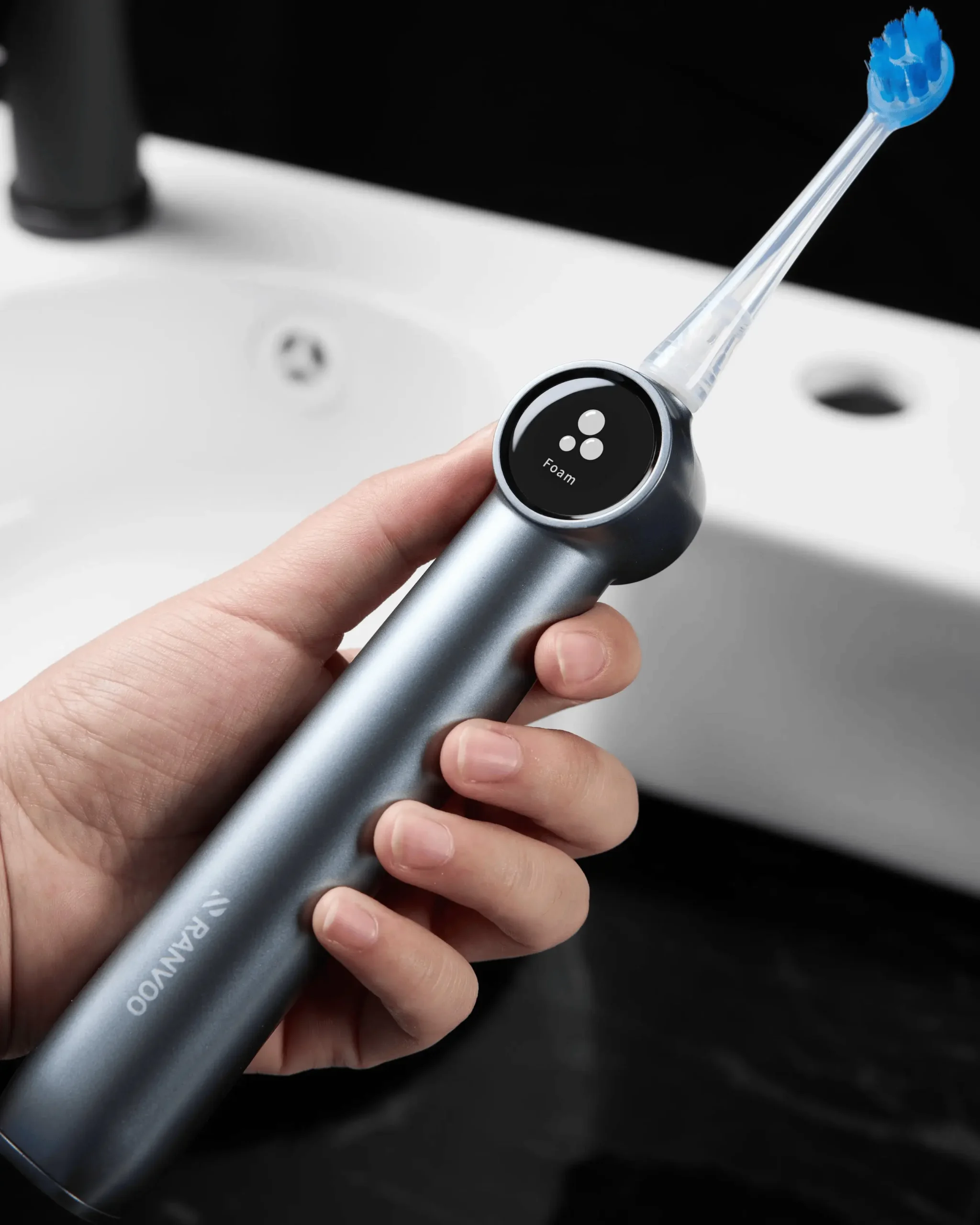
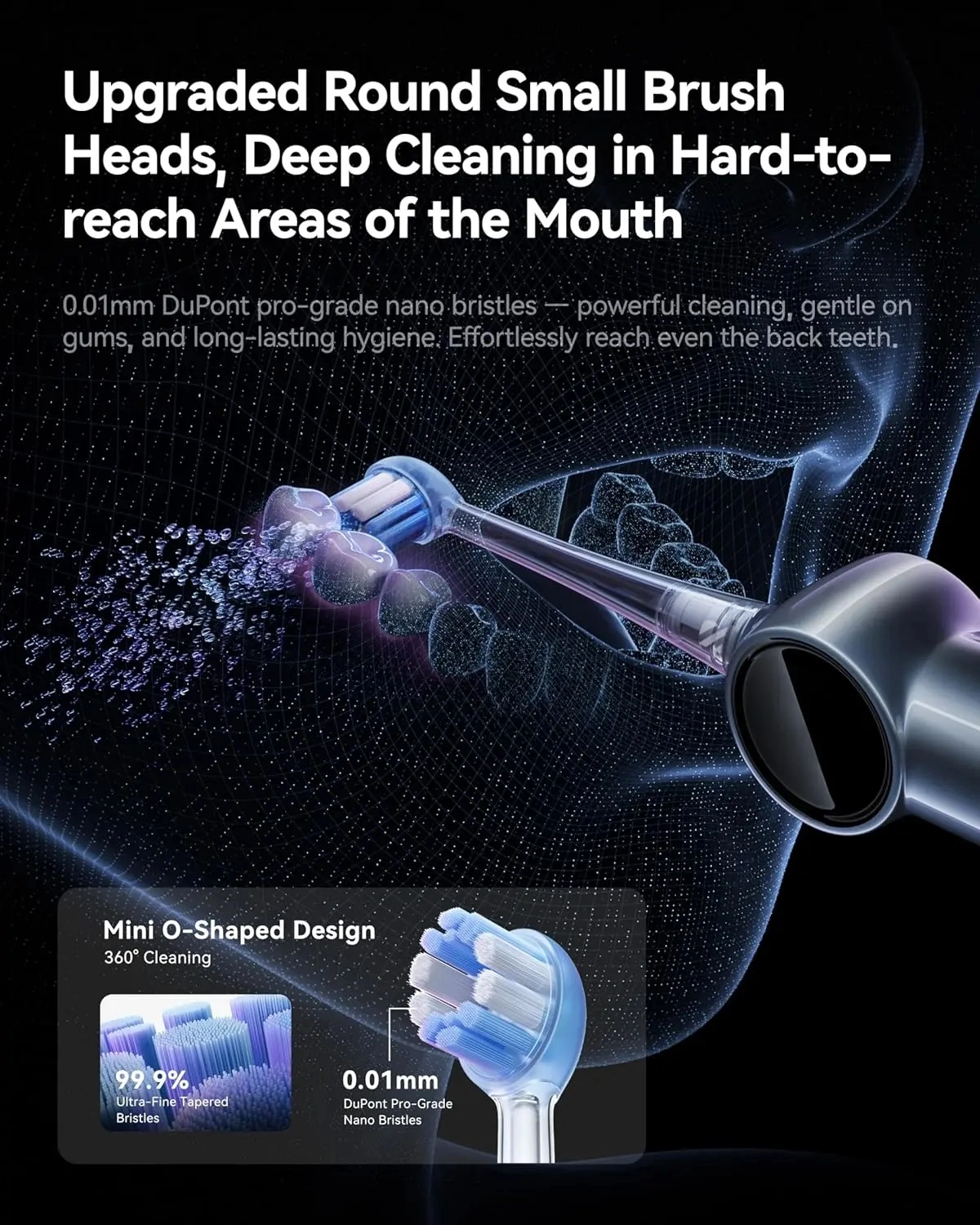
Here’s what happens when you brush with it. A miniature pump inside the handle pressurizes air and sends it through a hollow shaft to a boost chamber, which generates microscopic bubbles in the water and toothpaste foam. The brush head’s curved design shapes this into a gentle, focused stream of microbubbles that travel into the spaces between your teeth and along the gumline — then collapse, releasing tiny pulses of energy that lift plaque away.
The key point for sensitive teeth: the plaque is removed by the collapse of bubbles, not by bristles scraping against your teeth and gums. The bristles are still there — 0.01 mm ultra-fine tapered tips, 99.9% taper rate, in a soft rubber-backed head — but they’re guides, not scrapers.
The results reflect that philosophy. RANVOO’s internal lab reports a 99% plaque-removal rate with a 56% reduction in physical force and a 90% reduction in composite gum-damage rate compared with conventional electric toothbrushes.
And because sensitivity is personal, the X5 gives you control: a Gentle mode for tender days, plus AirJet™, Clean, and Whiten modes for when you want more — all shown on a full-screen display. With up to 60 days of battery life and a magnetic wall mount, it’s designed to be a low-effort part of your routine — because consistency matters more than intensity.
One note: the X5’s cleaning efficiency carries third-party validation through a CVC Cleaning Effect Classification Level 1 certificate (No. CVC24300012089, valid through February 2029) — though the performance figures are from the manufacturer’s internal lab, and any sensitivity concerns should always be discussed with your dentist.
The Takeaway
Tooth sensitivity is common, but it’s not something you have to just endure. And for many people, the fix starts with a fundamental question: is my toothbrush working with my teeth or against them?
If you’re wincing at cold drinks — or at the brush in your hand — it may be worth rethinking the tool. Not the brushing. Not the flossing. The mechanism.
The AirJet™ X5 is built on the idea that gentleness and effectiveness don’t have to be a trade-off. Clean thoroughly, brush gently, and give your enamel and gums the protection they deserve.
Because the best brush isn’t the one that scrubs hardest. It’s the one that cleans deeply — and lets your teeth finally relax.