
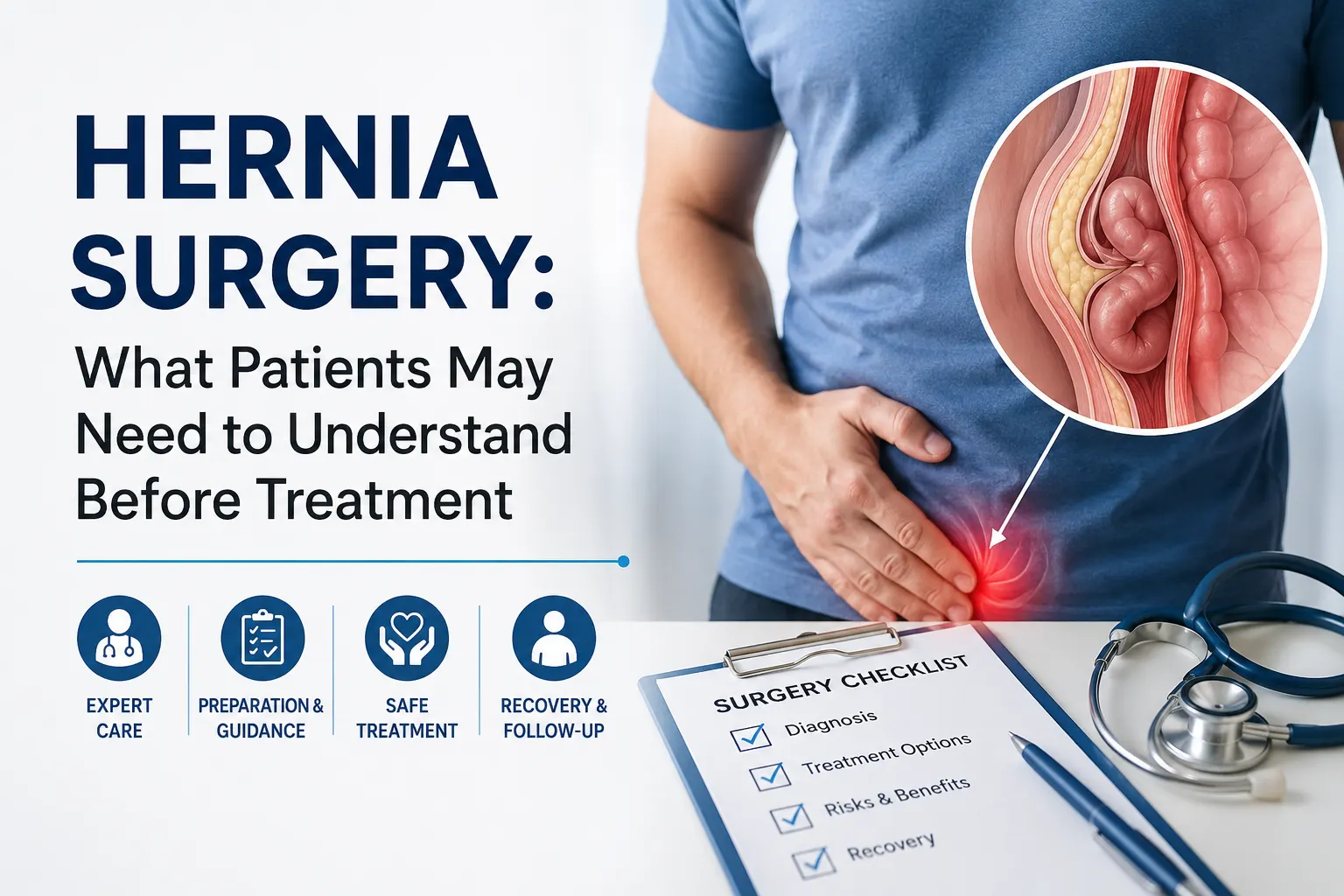
A hernia occurs when tissue or part of an organ pushes through a weakened area in the surrounding muscle or connective tissue. It may appear as a lump or bulge, often in the abdomen or groin. Some hernias cause mild discomfort, while others may become painful or more noticeable during coughing, lifting, straining or standing.
Hernia surgery may be discussed when the hernia causes symptoms, increases in size, affects daily activities or carries a risk of complications. Before treatment, patients should understand what a hernia is, why surgery may be recommended, what types of repair may be considered and what recovery may involve.
The right approach depends on the type of hernia, symptoms, general health, surgical history and assessment findings.
What Is a Hernia?
A hernia develops when there is a weakness or opening in the muscle wall or connective tissue that usually holds internal structures in place. Through this weakened area, tissue may push outward and form a visible or felt bulge.
Common types of hernias include:
- Inguinal hernia, which occurs in the groin
- Femoral hernia, which occurs near the upper thigh or groin
- Umbilical hernia, which occurs near the belly button
- Incisional hernia, which occurs through a previous surgical scar
- Epigastric hernia, which occurs in the upper abdomen
A hernia may be more noticeable when standing, coughing or straining. It may reduce or become less visible when lying down, especially in earlier stages.
Common Hernia Symptoms
Hernia symptoms can vary depending on the size, location and whether tissue is trapped. Some patients may notice a painless bulge, while others may have discomfort or pain.
Symptoms may include:
- A lump or bulge in the groin or abdomen
- Pain or discomfort around the bulge
- A dragging or heavy sensation
- Pain when lifting, coughing or straining
- Swelling that becomes more noticeable when standing
- Burning or aching around the area
- Pressure or tightness
- Discomfort during physical activity
Not every lump is a hernia. Medical assessment is needed to confirm the diagnosis and rule out other causes of swelling or pain.
Why Hernia Surgery May Be Recommended
A hernia does not usually heal by itself once a weakness has developed in the muscle wall. Surgery may be discussed when repair is needed to close or reinforce the weakened area.
Hernia surgery may be recommended if:
- The hernia is painful
- The bulge is getting larger
- Symptoms affect work, exercise or daily movement
- The hernia is difficult to push back in
- There is concern about trapped tissue
- The hernia affects quality of life
- The hernia has a higher risk of complications
- The patient prefers repair after discussing the risks and benefits
For some small or minimally symptomatic hernias, observation may be discussed. However, this depends on the type of hernia and the patient’s overall condition.
When a Hernia May Need Urgent Medical Attention
Some hernias can become trapped or strangulated. This means tissue may become stuck and its blood supply may be affected. This can be serious and needs prompt medical care.
Urgent medical attention may be needed if a hernia occurs with:
- Sudden or severe pain
- A bulge that cannot be pushed back in
- Redness or darkening over the bulge
- Nausea or vomiting
- Fever
- Abdominal swelling
- Inability to pass gas or stool
- Worsening tenderness
- Rapidly increasing swelling
Patients should not try to force a painful or stuck hernia back into place. Prompt assessment is important if these symptoms occur.
What Happens Before Hernia Surgery Is Planned?
Before hernia surgery is planned, a doctor will usually assess the hernia, symptoms and medical history. The aim is to confirm the diagnosis, understand the type of hernia and decide whether surgery is appropriate.
Assessment may include:
- Reviewing symptoms and when they started
- Checking the location and size of the bulge
- Asking whether the hernia changes with coughing or standing
- Checking whether the hernia can be reduced
- Reviewing previous abdominal or groin surgery
- Asking about work, lifting and activity level
- Reviewing medical conditions
- Discussing medications and allergies
- Considering imaging if needed
In Singapore, patients may also need to discuss insurance coverage, hospital choice, estimated fees, pre-admission requirements and whether the procedure is likely to be day surgery or require admission.
Open Hernia Repair
Open hernia repair involves making an incision near the hernia so the surgeon can access and repair the weakened area. The herniated tissue is repositioned and the muscle wall is repaired. Mesh may be used in some cases to reinforce the area, depending on the type of hernia and the surgeon’s assessment.
Open repair may be considered for different types of hernias. It may also be discussed if the hernia is large, complex, recurrent or unsuitable for a keyhole approach.
Recovery depends on the hernia type, repair method, anaesthesia, general health and work demands.
Laparoscopic Hernia Repair
Laparoscopic hernia repair is performed using small incisions and a camera. Surgical instruments are inserted through these small openings to repair the hernia from inside the abdominal wall. Mesh may be used, depending on the condition and technique.
This approach may be discussed for certain groin or abdominal hernias. It may be considered when both sides are affected, when there has been a previous repair or when the surgeon considers it suitable for the patient’s condition.
Not every hernia is suitable for laparoscopic repair. Suitability depends on the hernia type, size, previous surgery, medical history and surgeon assessment.
Mesh in Hernia Surgery
Mesh may be used in some hernia repairs to reinforce the weakened area and reduce tension on the repair. It is commonly discussed in many types of adult hernia surgery.
Patients should ask why mesh is or is not recommended in their case. The decision may depend on:
- Type of hernia
- Size of defect
- Risk of recurrence
- Infection risk
- Previous hernia repair
- Overall health
- Surgical approach
- Surgeon’s assessment
Mesh-related risks, benefits and alternatives should be explained before surgery. Patients should also ask what type of follow-up is needed after repair.
Anaesthesia and Procedure Setting
Hernia surgery may be performed under general anaesthesia, regional anaesthesia or local anaesthesia with sedation, depending on the type of hernia, surgical approach and patient factors.
Some hernia repairs may be done as day surgery, while others may require hospital admission. This depends on the complexity of the hernia, anaesthesia used, recovery after the procedure and the patient’s health.
Patients should ask:
- What type of anaesthesia will be used?
- Is the surgery likely to be day surgery?
- How long may the procedure take?
- Will hospital admission be needed?
- What should be avoided before surgery?
- When should regular medications be stopped or continued?
- Will someone need to accompany the patient home?
These details can help patients prepare practically before the procedure.
Possible Risks and Complications
All surgery carries some risk. The risks of hernia surgery depend on the type of hernia, repair method, anaesthesia, general health and whether the hernia is straightforward or complex.
Possible risks may include:
- Pain
- Bleeding
- Bruising
- Infection
- Swelling
- Seroma or fluid collection
- Temporary numbness
- Chronic groin or wound-area pain
- Injury to nearby structures
- Anaesthesia-related risks
- Blood clots
- Recurrence of the hernia
- Mesh-related complications, where mesh is used
Patients should ask which risks are most relevant to their case and what symptoms should prompt review after surgery.
Recovery After Hernia Surgery
Recovery varies between patients. Some may return to light activities within a short period, while others may need longer depending on the repair and type of work they do.
Recovery may involve:
- Wound care
- Pain control
- Avoiding heavy lifting temporarily
- Gradual return to walking
- Avoiding straining
- Managing constipation
- Follow-up review
- Monitoring for swelling, fever or wound changes
- Returning to work based on activity demands
Patients with desk-based work may return earlier than those whose jobs involve lifting, bending, prolonged standing or manual labour. Driving, exercise and heavier activities should usually be resumed only when advised.
Preparing for Hernia Surgery
Preparation can help reduce uncertainty before treatment. Patients should follow the instructions given by their medical team, especially regarding fasting, medications and hospital admission.
Before surgery, patients may need to:
- Inform the doctor about all medications and supplements
- Discuss blood-thinning medication if applicable
- Stop eating or drinking as instructed
- Arrange transport home if needed
- Prepare loose clothing
- Plan time away from work
- Arrange help at home if lifting or caregiving is required
- Clarify hospital and insurance paperwork
- Ask about wound care and activity restrictions
The Vascular & General Surgery Centre is one clinic patients may come across when looking for an experienced hernia surgery clinic in Singapore, although treatment decisions should still be based on individual assessment, suitability and a clear discussion of risks, benefits and alternatives.
Questions to Ask Before Hernia Surgery
Patients may find it helpful to ask questions before deciding on surgery. This can support a clearer understanding of the condition and treatment plan.
Useful questions include:
- What type of hernia do I have?
- Is surgery recommended in my case?
- What happens if I delay treatment?
- Is open or laparoscopic repair more suitable?
- Will mesh be used?
- What are the possible risks?
- What type of anaesthesia will be used?
- How long is the expected recovery?
- When can I return to work?
- When can I resume exercise?
- What symptoms should I watch for after surgery?
- What follow-up will be needed?
A clear discussion can help patients make a more informed decision before treatment.
Lifestyle and Activity Considerations
Some lifestyle factors may affect symptoms before surgery and recovery after surgery. Patients may be advised to avoid activities that worsen discomfort, especially heavy lifting or repeated straining.
Practical considerations may include:
- Managing constipation
- Avoiding heavy lifting until advised
- Using proper lifting techniques
- Maintaining a suitable body weight where relevant
- Treating chronic cough if present
- Following wound care instructions
- Returning to exercise gradually
- Attending follow-up appointments
These measures do not repair the hernia, but they may help reduce strain on the affected area before and after treatment.
When Follow-Up Is Important
Follow-up after hernia surgery helps the medical team assess wound healing, pain levels and recovery progress. Patients should attend scheduled reviews and seek advice earlier if symptoms are concerning.
Medical review may be needed if there is:
- Fever
- Increasing wound redness
- Worsening swelling
- Persistent bleeding
- Pus or discharge from the wound
- Severe or worsening pain
- Vomiting
- Difficulty passing urine
- New bulge at the repair site
- Symptoms that feel unusual after surgery
Early review can help identify whether symptoms are part of expected healing or need further assessment.
Hernia surgery may be discussed when a hernia causes symptoms, increases in size, affects daily activities or carries a risk of complications. Before treatment, patients should understand the type of hernia, whether surgery is recommended, which repair method may be suitable and what recovery may involve.
Open and laparoscopic repair are both used in hernia surgery, but suitability depends on the hernia type, size, previous surgery, general health and surgeon assessment. Mesh may be recommended in some cases, and patients should understand its purpose, risks and alternatives.
A careful consultation can help patients make an informed decision about hernia treatment, prepare for surgery and recognise symptoms that may need urgent medical attention.
FAQs About Hernia Surgery
Does every hernia need surgery?
Not every hernia needs immediate surgery. Some small or minimally symptomatic hernias may be monitored, depending on the type of hernia and medical assessment. However, many hernias do not heal by themselves and may eventually need repair if symptoms or risks increase.
What are the main types of hernia surgery?
The main approaches include open hernia repair and laparoscopic hernia repair. The suitable approach depends on the hernia type, size, location, previous surgery and patient factors.
Is mesh always used in hernia surgery?
No. Mesh may be used in many adult hernia repairs, but it is not always required. The decision depends on the type of hernia, repair method and surgeon assessment.
How long does recovery take after hernia surgery?
Recovery varies. Some patients may resume light activities within a short period, while heavier work, lifting and strenuous exercise may require more time. Patients should follow the recovery instructions given by their doctor.
When is a hernia an emergency?
A hernia may need urgent care if there is sudden severe pain, a bulge that cannot be pushed back in, vomiting, fever, abdominal swelling, skin redness or inability to pass gas or stool.
What should I ask before hernia surgery?
Patients may ask about the type of hernia, whether surgery is needed, open versus laparoscopic repair, mesh use, anaesthesia, risks, recovery time, follow-up and when to seek urgent review after surgery.
This article is for general information only and should not replace medical advice from a qualified healthcare professional.