
Most people think about orthodontic treatment as a purely cosmetic decision. You get braces or aligners, your teeth straighten up, and you end up with a nicer smile. That part is true. But there’s a lot more going on beneath the surface. Orthodontic care delivers genuine, measurable health benefits that affect how you eat, breathe, sleep, and feel about yourself every single day. Whether you’re a parent weighing options for your child or an adult who’s been putting off treatment for years, understanding the full picture changes how you see that investment. Here are seven health benefits worth taking seriously.
1. Better Chewing Leads to Better Digestion
Your teeth are the first step in the digestive process. When your bite is misaligned, molars and incisors can’t meet properly, which means food doesn’t get broken down the way it should before it hits your stomach. Over time, this forces your digestive system to work harder to compensate.
Properly aligned teeth break down food more efficiently, which leads to improved digestion. That’s not a minor perk. Chronic digestive discomfort, bloating, and inefficient nutrient absorption can all trace back to chewing problems that nobody ever connected to crooked teeth. Straightening your bite addresses the root issue rather than the symptoms.
2. Reduced Risk of Jaw Pain and TMJ Problems
If you’ve ever woken up with a sore jaw, a dull headache, or tension around your temples, your bite alignment could be a contributing factor. When your upper and lower teeth don’t meet correctly, the muscles and joints supporting your jaw are constantly compensating. That compensation creates chronic strain.
Misaligned bites can contribute to a variety of health issues, from sinus problems to TMJ pain. When teeth are not properly aligned, they grind against each other in an unnatural way, causing excessive wear and tear, which in turn can lead to headaches, migraines, and difficulty chewing. Orthodontic treatment corrects the underlying alignment rather than just masking the discomfort. By aligning the teeth, the jaw moves smoothly and without undue stress, reducing the risk of health issues and making everyday activities like chewing easy and pain-free.
3. Healthier Gums and a Lower Risk of Periodontal Disease
Crowded or overlapping teeth create pockets and surfaces that are genuinely difficult to clean, no matter how committed you are to your oral hygiene routine. Plaque and bacteria settle into tight gaps that your toothbrush and floss can’t reach effectively. Over months and years, that buildup escalates into gum inflammation and, eventually, periodontal disease.
Straight teeth fit better in the gums, reducing the risk of periodontal disease. The gum tissue around well-aligned teeth hugs each tooth snugly, leaving fewer places for bacteria to hide. That single structural change makes your daily brushing and flossing dramatically more effective. When you have gum disease, bacteria from your mouth can enter your bloodstream and cause health problems throughout the body, so keeping gums healthy is about far more than your mouth alone.
For more information on the connection between gum disease and systemic health, the American Dental Association’s overview of gum disease is a reliable resource to review.
4. Protection Against Tooth Enamel Wear
Tooth enamel doesn’t grow back. Once it wears away, it’s gone permanently, and the exposed dentin underneath is softer, more sensitive, and far more vulnerable to decay. A misaligned bite is one of the most common causes of uneven enamel erosion because certain teeth bear far more pressure than they were designed to handle.
An aligned bite prevents abnormal grinding, which protects tooth enamel from premature wear. Teeth grinding, often called bruxism, intensifies significantly when teeth don’t sit together properly. Conditions like TMJ and teeth grinding noticeably decrease after teeth straightening treatments. Protecting your enamel through orthodontic alignment is a proactive move that reduces the likelihood of needing crowns, fillings, or other restorative work down the road.
5. Improved Mental Health and Self-Confidence
The psychological impact of orthodontic treatment is well-documented, and it goes much deeper than vanity. When you’re self-conscious about your teeth, you adapt your behavior to compensate. You smile less, cover your mouth in photos, avoid certain social situations, and hold yourself back in professional settings. That constant guarding takes a real mental toll.
When individuals are self-conscious about crowded teeth, gaps, or misaligned teeth, they often develop a habit of “guarded smiling” by covering their mouth with a hand, smiling with closed lips, or avoiding social interactions entirely. One of the most profound benefits of straight teeth is the removal of this hidden anxiety.
When you achieve aligned teeth, you smile more freely and frequently, which triggers a positive biological feedback loop because smiling actually releases endorphins and reduces stress, leading to a genuinely happier state of mind.
Research published in the National Institutes of Health’s PubMed Central found that dental self-confidence positively impacted self-esteem, which in turn had a significant impact on well-being. Together, self-esteem and dental self-confidence explained 59.9% of the variation in subjective well-being among participants. That’s a striking number for what many people dismiss as a cosmetic procedure.
92% of adults who straightened their teeth reported that confidence improvement was a primary reason for the procedure, and almost 80% of adults report that straightening their teeth was one of the most important treatments in their lives. If you’re based in Manitoba and weighing your options, connecting with the best orthodontist winnipeg has available is a practical first step toward understanding what treatment could look like for you specifically.
6. Easier Long-Term Oral Hygiene Maintenance
Straight teeth aren’t just healthier in a structural sense. They’re also much easier to keep clean day in, day out. This matters because oral hygiene isn’t a one-time fix. It’s a daily habit that compounds over decades, and your anatomy either makes that habit easier or harder.
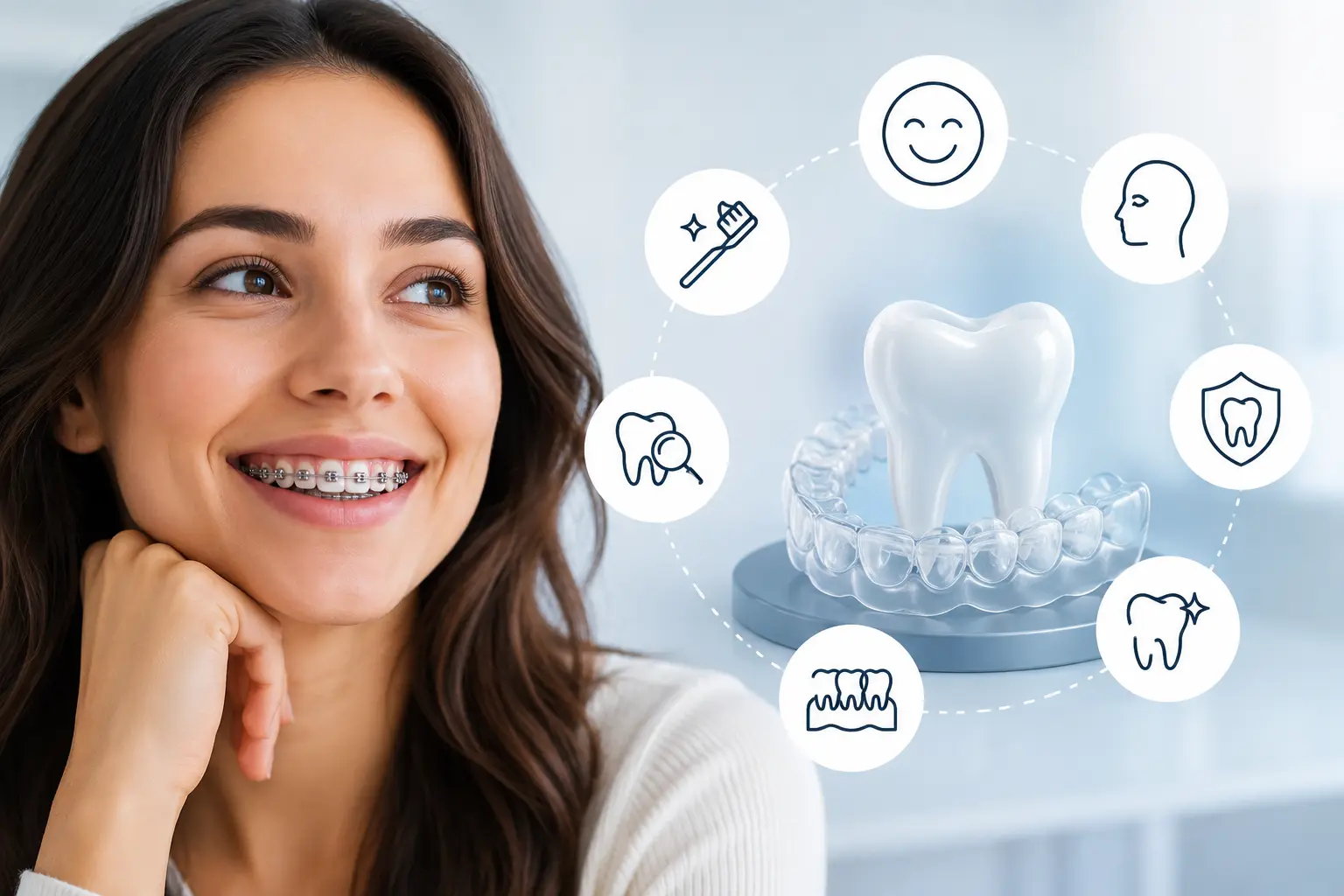
Braces are just one of the many appliances your orthodontist may use to straighten your teeth, fix your bite, and improve your smile. You may require treatment to address problems with your bite, such as crossbite, underbite, overbite, and open bite, as well as teeth crowding and jaw issues before your teeth reach a position where cleaning them becomes straightforward.
Once treatment is complete, properly spaced teeth allow your toothbrush bristles to reach every surface. Flossing becomes faster and more thorough. Interdental brushes glide through gaps without forcing or skipping. Adults who have routine dental care two or more times per year report significantly higher rates of self-confidence than people who go less than once a year. Orthodontic alignment makes it easier to commit to that routine because cleaning your teeth actually works.
7. Long-Term Stability Supports Future Dental Work
If you ever need a crown, an implant, a bridge, or any significant restorative procedure later in life, the baseline alignment of your teeth determines how well that work holds up. Dental restorations placed into a misaligned bite face uneven bite forces that can cause them to crack, shift, or fail prematurely.
Adult orthodontics provide aesthetic improvements and also create stability in future dental work. More people than ever before are making informed decisions about investing in straight teeth so they feel good about their appearance and protect themselves from potential long-term problems associated with malocclusions or overcrowded teeth.
The retention phase of orthodontic treatment is what locks in those gains over time. The retention stage preserves your results once braces or aligners are removed, and customized retainers maintain alignment while the bone and gum tissue adapt to their new positions. Wearing your retainer as prescribed isn’t optional. It’s what protects the investment you made in your own health.
The American Association of Orthodontists outlines why ongoing retention is a critical component of lasting orthodontic results, and their patient resources are worth reviewing if you want to understand what post-treatment care actually involves.
What to Expect From the Treatment Process
One reason adults hesitate to pursue orthodontic care is a vague sense that it’s complicated or disruptive. The reality is that modern treatment is more straightforward than most people expect. There are three general stages of braces and Invisalign treatment: the planning stage, the active stage, and the retention stage.
The planning stage covers your consultation, diagnostic scans, and treatment design. Orthodontic records will be taken of the patient including photos, digital X-rays, and in some cases 3D imaging. During the initial consultation, your orthodontist will also gather information on your medical and dental history. From there, active treatment begins, during which braces or aligners move your teeth gradually over a period of months. Treatment duration varies by patient but generally ranges from 12 to 30 months, depending on age, orthodontic complexity, and appliance type.
Discomfort during treatment is normal and usually manageable. It’s common to experience some discomfort after adjustments. Soft foods and over-the-counter pain relievers can help manage this. Most patients adapt quickly and find the process far less intrusive than they anticipated.
Your Teeth Are Worth the Effort
Orthodontic treatment isn’t a luxury. It’s a health decision with consequences that ripple outward into your digestion, your jaw function, your gum health, your mental well-being, and the durability of any future dental work you might need. The seven benefits above aren’t abstract. They’re documented, they’re measurable, and they affect your daily quality of life.
Orthodontic treatment is a worthwhile investment in oral health, no matter how old you are. It can improve aesthetic results and boost self-confidence, and orthodontic care helps people of all ages establish better dental habits for the future, setting them up with stronger foundations that will support their long-term oral health.
If you’ve been sitting on the fence about starting treatment, the facts make a compelling case for taking that first step.