

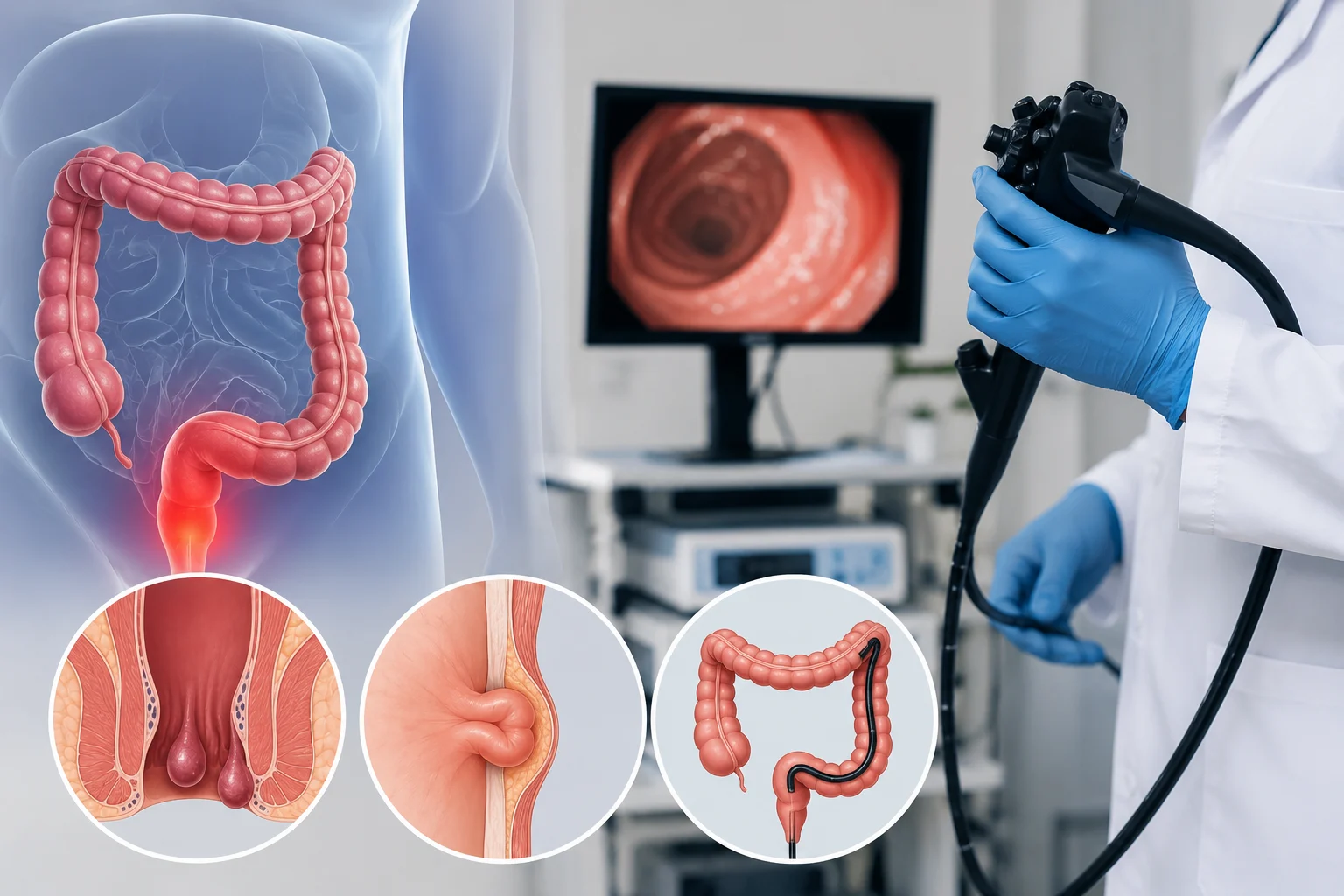
Symptoms involving the bowel, anus or abdomen can range from mild discomfort to problems that need further investigation. Piles, abdominal or groin hernias, and concerns that may require a colonoscopy are among the reasons patients may seek surgical or colorectal assessment.
It is useful to make one distinction from the start: piles and hernias are medical conditions, while a colonoscopy is a procedure used to examine the colon and rectum.
A colorectal clinic mainly manages conditions affecting the colon, rectum and anus. Some colorectal surgeons also manage general surgical conditions such as hernias, although this varies between clinics. Understanding these conditions can help you know what symptoms to look out for and when to seek medical care.
What Does a Colorectal Clinic Manage?
Colorectal specialists assess conditions involving the lower digestive tract and the area around the anus.
Common reasons for consultation can include:
- Piles or haemorrhoids
- Anal fissures
- Anal abscesses and fistulas
- Rectal bleeding
- Changes in bowel habits
- Constipation
- Colorectal polyps
- Diverticular disease
- Inflammatory bowel disease
- Rectal prolapse
- Colon and rectal cancer
Colonoscopy may also form part of the investigation or screening process when clinically appropriate.
Some surgeons who practise colorectal surgery also treat abdominal wall or groin hernias. However, not every colorectal clinic provides hernia treatment, so it is worth checking the clinic’s services before making an appointment for a suspected hernia.
Piles: A Common Cause of Anal Symptoms
Piles, also known as haemorrhoids, are swollen blood vessels and surrounding tissue in or around the anus.
They can develop inside the anal canal or around the outside of the anus.
What Do Piles Feel Like?
Symptoms can include:
- Bright red blood after passing stool
- Blood on toilet paper
- Itching around the anus
- Soreness or discomfort
- A lump near the anus
- Mucus after passing stool
- A feeling that the bowel has not emptied completely
- Tissue that protrudes from the anus during a bowel movement
Some haemorrhoids cause few or no symptoms.
Why Do Piles Develop?
Piles are associated with increased pressure around the blood vessels of the anus and rectum.
Factors that may contribute include:
- Long-term constipation
- Frequent straining when passing stool
- Spending long periods sitting on the toilet
- A diet low in fibre
- Inadequate fluid intake
- Pregnancy
- Being overweight
- Frequent heavy lifting
- Age-related changes in supporting tissues
Reducing constipation and avoiding unnecessary straining may help ease symptoms in some people.
When Should Piles Be Checked?
Mild haemorrhoid symptoms may sometimes settle with simple measures such as increasing fibre intake, drinking enough fluids and avoiding prolonged straining.
Medical assessment is advisable if:
- Bleeding keeps returning
- Symptoms persist or become worse
- A lump remains outside the anus
- Pain becomes significant
- Symptoms interfere with daily activities
- There is an unexplained change in bowel habits
- You experience unexplained weight or appetite changes
Most importantly, do not automatically assume that rectal bleeding is caused by piles. Other bowel conditions can also cause bleeding.
Hernias: When a Lump May Need Surgical Assessment
A hernia occurs when tissue or part of an internal organ pushes through a weak area in the surrounding muscle or abdominal wall.
Hernias can develop in several areas.
Common types include:
- Inguinal hernia: develops in the groin
- Umbilical or paraumbilical hernia: develops around the belly button
- Incisional hernia: develops through or near a previous surgical scar
- Ventral hernia: develops through another weak area of the abdominal wall
What Are the Symptoms of a Hernia?
A hernia may cause:
- A visible or noticeable lump in the abdomen or groin
- A bulge that becomes clearer when standing
- Swelling that becomes larger when coughing or straining
- A pulling or dragging feeling
- Discomfort during physical activity
- Pain around the affected area
Some hernias become less noticeable when lying down.
Why Might a Hernia Require Treatment?
A hernia does not usually repair the weakened abdominal wall on its own.
The appropriate management depends on factors such as:
- The type of hernia
- Its location
- Its size
- Whether it causes pain or discomfort
- Whether it is becoming larger
- The person’s overall health
- The risk of bowel becoming trapped
A surgeon may recommend observation in some situations or discuss surgical repair when treatment is appropriate.
When Is a Hernia an Emergency?
A hernia can occasionally trap part of the bowel, causing an obstruction or affecting its blood supply.
Seek urgent medical attention if a hernia is associated with:
- Sudden or severe abdominal or groin pain
- Increasing pain around the hernia
- Vomiting
- A swelling that becomes firm and does not settle
- Abdominal swelling together with difficulty passing stool or gas
- Feeling significantly unwell
These symptoms can indicate a complication that requires urgent assessment.
Colonoscopy: Looking Inside the Colon and Rectum
Unlike piles and hernias, colonoscopy is not a disease or condition. It is a procedure used to examine the inside of the colon and rectum.
A colonoscope is a thin, flexible tube with a camera at its tip. It is passed through the anus so the doctor can inspect the lining of the large intestine.
Why Might a Colorectal Doctor Recommend a Colonoscopy?
A colonoscopy can be used for both screening and investigation.
It may be considered for:
- Rectal bleeding
- Blood detected in the stool
- Persistent changes in bowel habits
- Unexplained anaemia
- Ongoing diarrhoea
- Suspected inflammatory bowel disease
- Follow-up of previously detected colon polyps
- Colorectal cancer screening
- Follow-up after certain colorectal conditions or procedures
Having one of these symptoms does not automatically mean that a serious bowel condition is present. Colonoscopy is one way of investigating possible causes.
What Can a Colonoscopy Detect?
During the procedure, the doctor can look for abnormalities such as:
- Colon or rectal polyps
- Areas of inflammation
- Sources of bleeding
- Diverticular disease
- Abnormal tissue
- Changes that may suggest colorectal cancer
Small tissue samples, known as biopsies, can be taken when necessary.
Some polyps can also be removed during the procedure and sent for laboratory examination.
What Happens Before a Colonoscopy?
The colon needs to be clear of stool so the doctor can see its lining properly.
Patients are therefore given specific bowel preparation instructions. These may involve:
- Changes to food intake before the procedure
- Drinking prescribed bowel-cleansing medication
- Drinking clear fluids as instructed
- Fasting for a specified period
- Reviewing certain medications with the healthcare team
Tell your doctor about all medicines and supplements you take, particularly blood-thinning medication and medicines used for diabetes.
Do not stop prescribed medicines without medical instructions.
What Happens During and After a Colonoscopy?
Sedation is commonly used during colonoscopy to help reduce discomfort and help the patient relax.
During the procedure, the colonoscope is carefully passed through the colon while the doctor examines the bowel lining.
Afterwards, temporary symptoms may include:
- Bloating
- Passing more gas
- Mild abdominal cramping
Patients who receive sedation will require some time to recover and should follow the clinic’s instructions about driving, work and other activities afterwards.
Although colonoscopy is routinely performed, complications can occur. These can include bleeding, reactions to sedation and, rarely, injury to the bowel wall. Your doctor should discuss relevant risks before the procedure.
How Are These Three Different?
Although piles, hernias and colonoscopy may all be discussed within a surgical setting, they play very different roles.
Piles
Piles affect the blood vessels and tissues around the anus. Treatment may range from bowel-habit changes and medication to clinic-based procedures or surgery.
Hernias
Hernias involve weakness in the abdominal wall that allows tissue to push through it. Assessment often focuses on whether the hernia is causing symptoms or is at risk of complications.
Colonoscopy
Colonoscopy is an investigation rather than a medical condition. It allows the doctor to examine the colon and rectum for possible causes of symptoms or as part of colorectal cancer screening.
Other Conditions Seen at a Colorectal Clinic
Patients may also seek assessment for other bowel and anal problems.
If symptoms such as persistent rectal bleeding, anal pain, recurrent discharge or ongoing changes in bowel habits continue, an assessment at a colorectal clinic in Singapore may help determine whether further examination or investigation is appropriate.
Anal Fissures
An anal fissure is a small tear in the lining of the anus. It can cause sharp pain during or after bowel movements and sometimes bright red bleeding.
Anal Abscesses and Fistulas
An anal abscess is an infected collection of pus near the anus. A fistula is a tunnel that can develop between the anal canal and the skin, often following an abscess.
Symptoms may include pain, swelling and pus discharge.
Persistent Changes in Bowel Habits
Changes such as ongoing constipation, diarrhoea or alterations in stool appearance may need investigation when they persist or occur with other symptoms.
Rectal Bleeding
Bleeding may arise from haemorrhoids or fissures, but it can also occur with other colorectal conditions. Recurrent or unexplained bleeding should be medically assessed.
What Happens at a Colorectal Consultation?
The appointment usually begins with a discussion about your symptoms and medical history.
You may be asked about:
- Your bowel habits
- Rectal bleeding
- Abdominal or anal pain
- Lumps or swelling
- Previous operations
- Previous colonoscopy results
- Current medications
- Family history of colorectal cancer or polyps
Depending on your symptoms, the doctor may examine your abdomen or anal area.
Further tests may then be recommended if the diagnosis is unclear or additional information is required.
5 Practical Takeaways
If you are experiencing bowel, anal or abdominal symptoms:
- Do not assume rectal bleeding is simply piles. Persistent or recurrent bleeding should be assessed so the cause can be identified.
- Have a new abdominal or groin lump checked. A suspected hernia should be examined, particularly if it is painful or becoming larger.
- Know the warning signs of a complicated hernia. Severe pain, vomiting or a painful firm swelling requires prompt medical attention.
- Follow colonoscopy preparation instructions carefully. Proper bowel cleansing helps the doctor examine the colon clearly.
- Keep a record of your symptoms. Note bowel changes, bleeding, pain, lumps and when symptoms occur so you can describe them clearly during your consultation.
Colorectal clinics assess a range of bowel and anal conditions, including piles, rectal bleeding, anal fissures, fistulas and diseases affecting the colon and rectum.
Piles can cause bleeding, itching, discomfort and anal lumps, while a hernia usually presents as a bulge caused by weakness in the abdominal wall. Some colorectal surgeons also manage hernias, although services vary between clinics.
Colonoscopy is different because it is an investigative and screening procedure rather than a condition. It allows the doctor to examine the colon and rectum and, when needed, take tissue samples or remove polyps.
Persistent bowel symptoms, unexplained rectal bleeding, troublesome anal symptoms or an abdominal or groin lump should be discussed with a healthcare professional so that the appropriate assessment can be arranged.
Disclaimer: This article is for informational purposes only and does not substitute for professional medical advice, diagnosis, or treatment.